
Modern Art Deco: The Magic of Skylights in the Interior
Art Deco emerged in the early twentieth century, as modernity advanced while luxury remained central. The style became a response to the industrial era, expressing progress through elegance and decorative refinement. Geometry, the sheen of metal, mirrors, and glass created cohesion and a layered composition of light that defined the interior.
Today, Art Deco is reinterpreted in contemporary interiors. Designers explore new ways to highlight lines, textures, and materials. Skylights are integrated into the architectural composition. Even a small opening adds depth and creates movement over the course of the day.
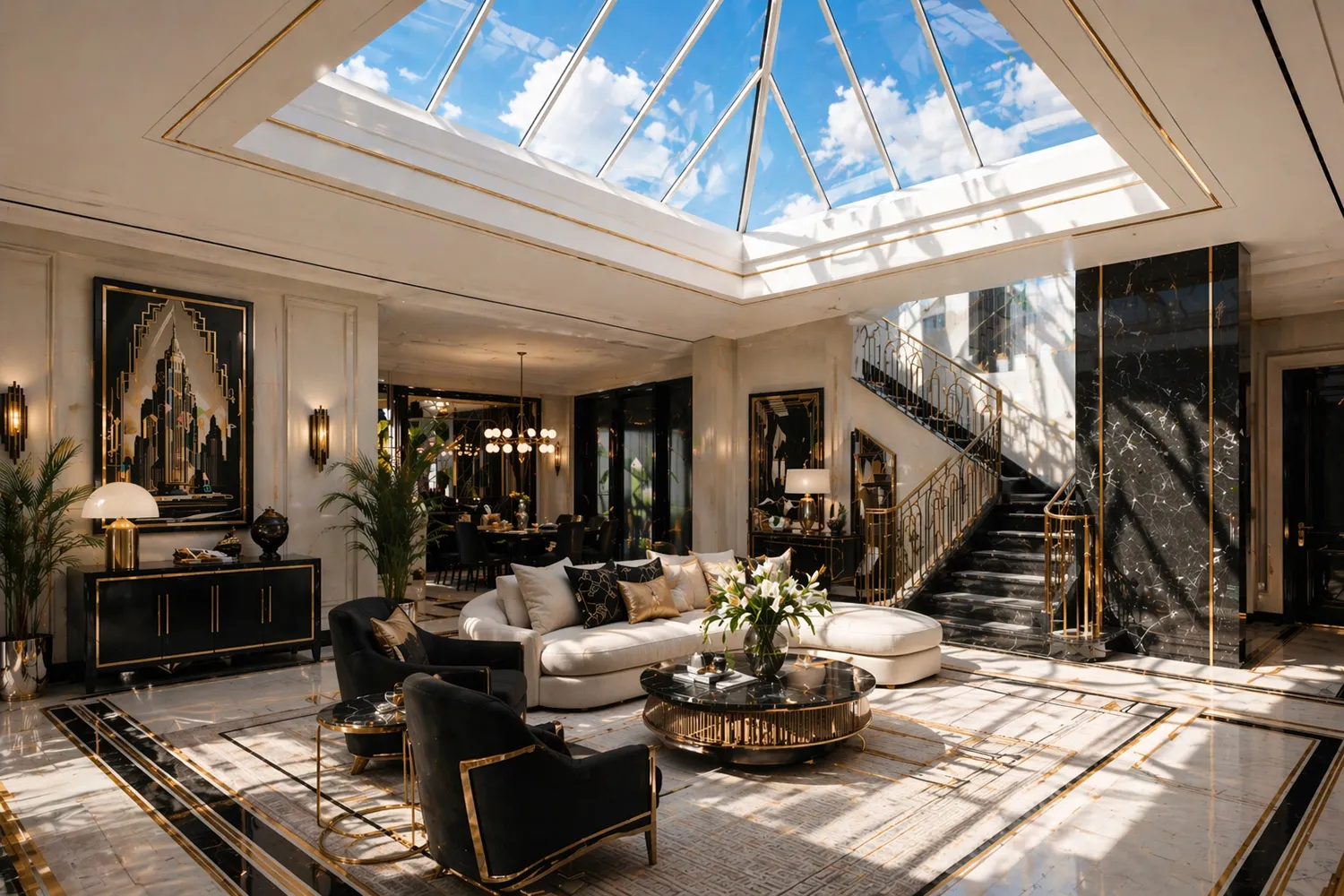
Architectural Context and Composition
Art Deco emerged between two worlds, the craftsmanship of the past and the industrial optimism of the future. It brings together the elegance of classical forms and the boldness of the machine age. Symmetry, repeating patterns, and rich materials such as marble, polished metal, lacquered wood, and glass became the hallmarks of the style.
Light has always been a key element in Art Deco interiors. Chandeliers with tiered pendants, decorative sconces, and stained glass created depth, emphasized material textures, and established visual rhythm. Skylights continue this tradition at an architectural scale. Reflections in mirrors, metal, and marble create contrasts that strengthen the geometry of the space.
It is defined not only by its amount, but by how it moves through the space. Skylights shape this movement over the course of the day.
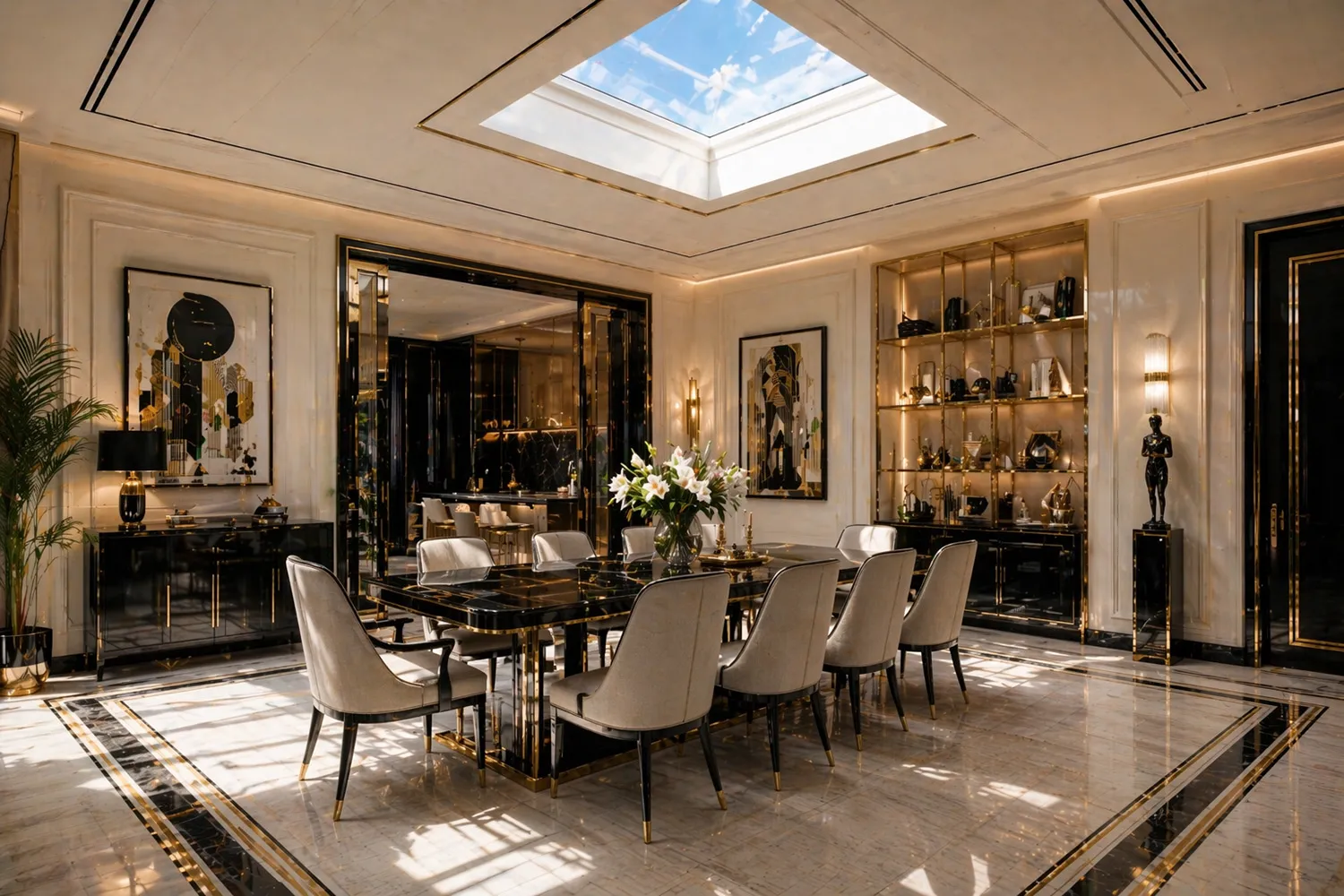
The Role of Skylights in the Interior
Daylighting structures perform several roles. They expand the space and define focal points.
In the living room, skylights highlight the sheen of decorative elements and the softness of textiles. In the kitchen, natural light brings out marble surfaces and metal details. In a home office or library, a skylight creates focus and intimacy.
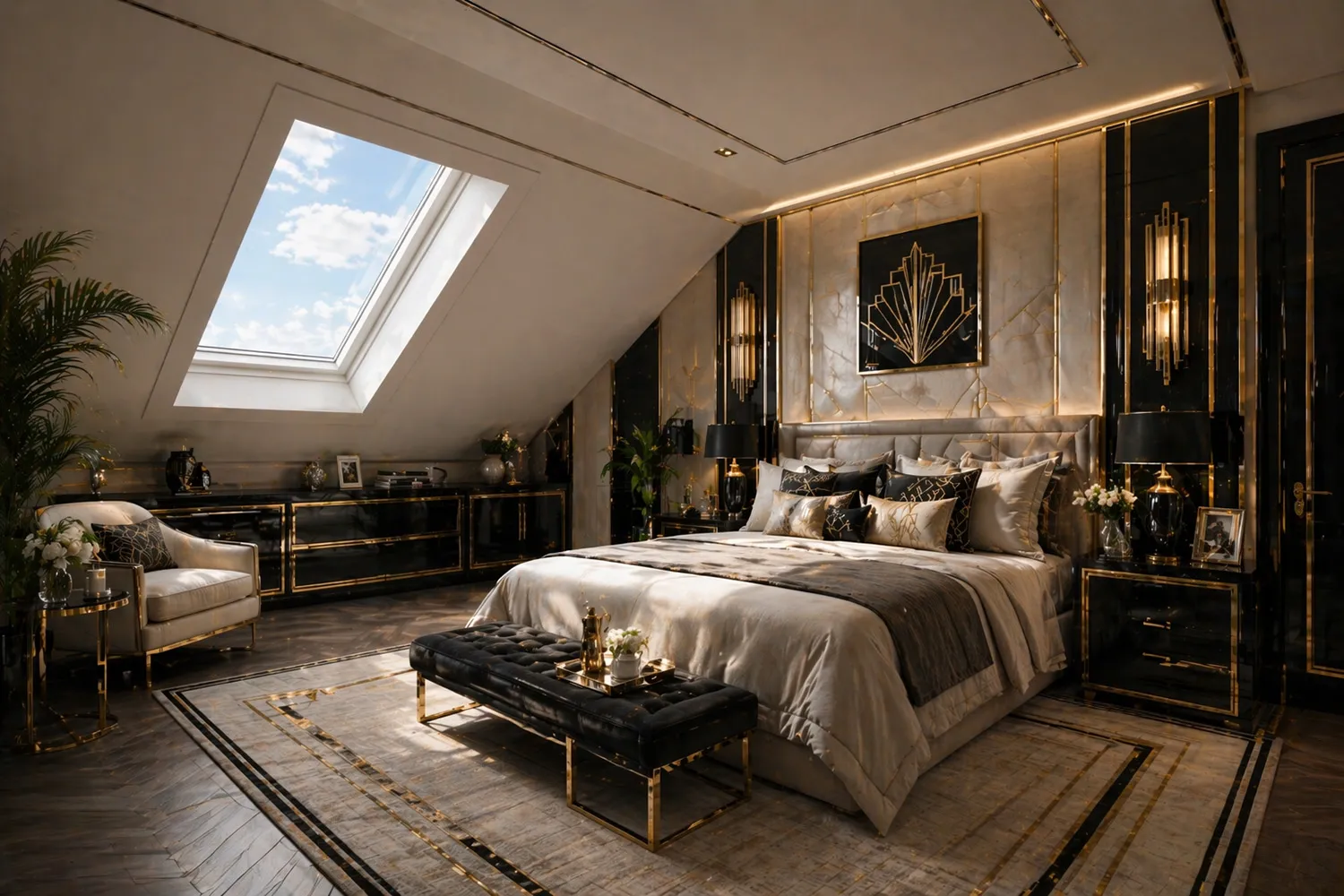
Designer Recommendations on Using Skylights in Art Deco Interiors.
1. Choose the type of structure based on how the space is used.
For a living room, dining room, or kitchen, venting skylights that open to provide fresh air are preferable. Fixed models are appropriate where the priority is maximum daylight and clean lines.
2. The placement of a skylight defines the character of the light.
Daylighting structures should be positioned above key areas of the room, in the center of the living room, above work surfaces, or over the dining table. Over a staircase, in a hallway, or in a dining area, several skylights can be installed side by side to reinforce architectural symmetry and emphasize the geometry of the space.
3. Use integrated shades to control illumination.
Solar and blackout shades integrate easily into the interior. Light-filtering shades soften daylight without obscuring decorative detail. Blackout shades provide privacy in bedrooms and media rooms.
4. Frame color and finishes should support the Art Deco aesthetic.
Light should highlight metal, marble, and glass and align with the interior palette. Frames and textile elements are best selected to enhance contrast or reinforce the rhythm of the composition rather than blend into the space.