
Light from Above: Skylights in Boho Design
Boho is a style of freedom, softness, and naturalness, where every detail tells a story. Woven furniture, rugs with ethnic patterns, plants, and textiles create comfort.
There are no strict rules in boho interiors: what matters is the balance between rich details and an airy space. Here, skylights become a natural extension of the interior. They fill rooms with soft daylight and emphasize the textures and tones of materials.
The Philosophy of Boho and the Role of Light
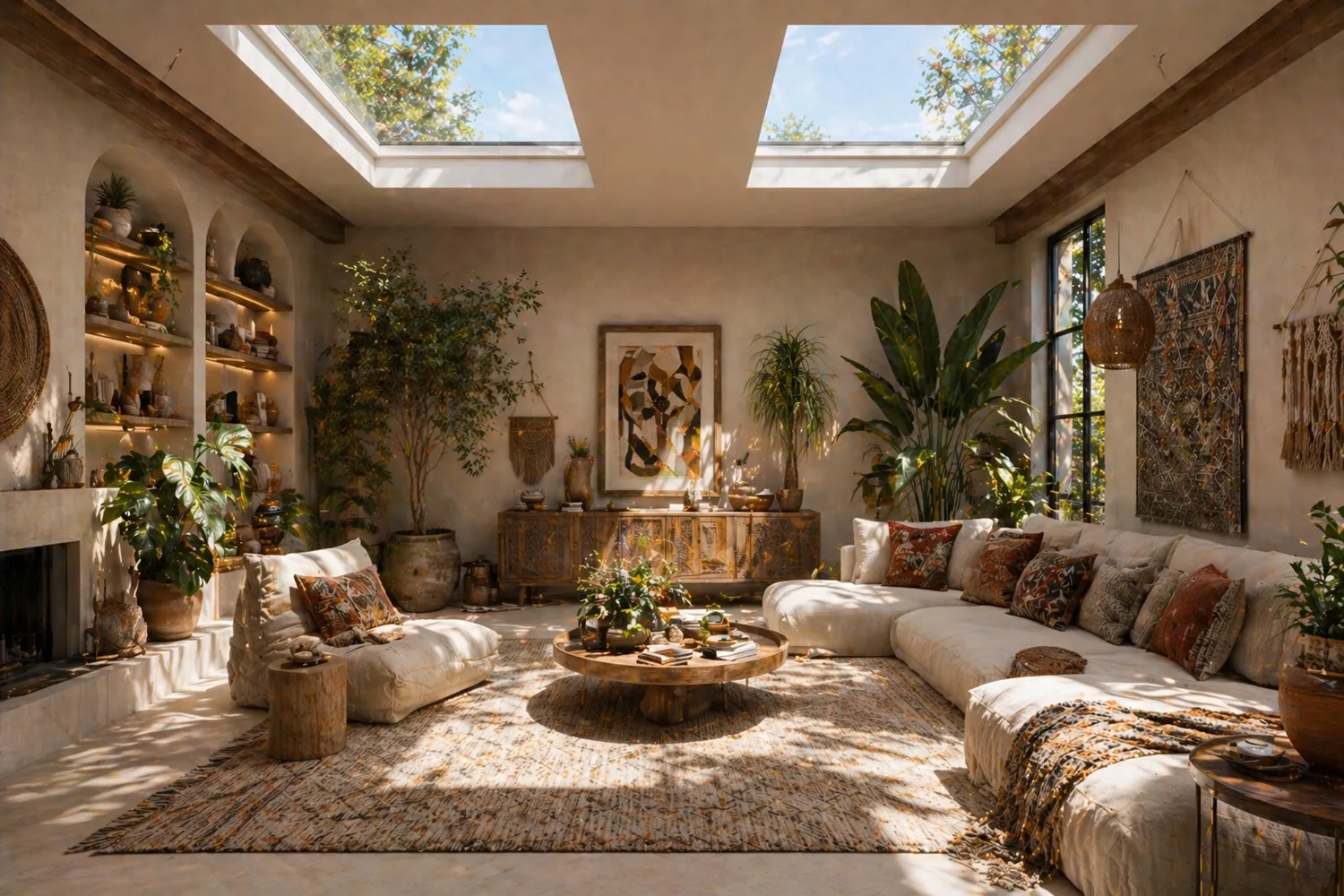
Boho has always reflected a desire for freedom and a rejection of rigid boundaries, whether in art or in life. Natural light coming from above reinforces this feeling. It blurs the edges of a space, creates soft shadows, and produces visual transitions that make an interior feel alive and open. Light becomes part of the space itself, reinforcing the boho idea of freedom and individuality.
The History of the Boho Style
Boho originated in the bohemian culture of 19th- and 20th-century Europe. Artists, writers, and musicians sought freedom from social and artistic constraints. They surrounded themselves with items that reflected individuality and history: handmade pieces, artworks collected from travels, and textiles with ethnic patterns.
By the mid-20th century, the style moved into home interiors. Woven furniture from Southeast Asia, handwoven rugs from Morocco, and detailed textiles bring texture and character into a space. Vintage items mixed with modern pieces, and bold patterns appeared alongside neutral tones. This approach allowed interiors to have their own life and reflect the personality of their owners.
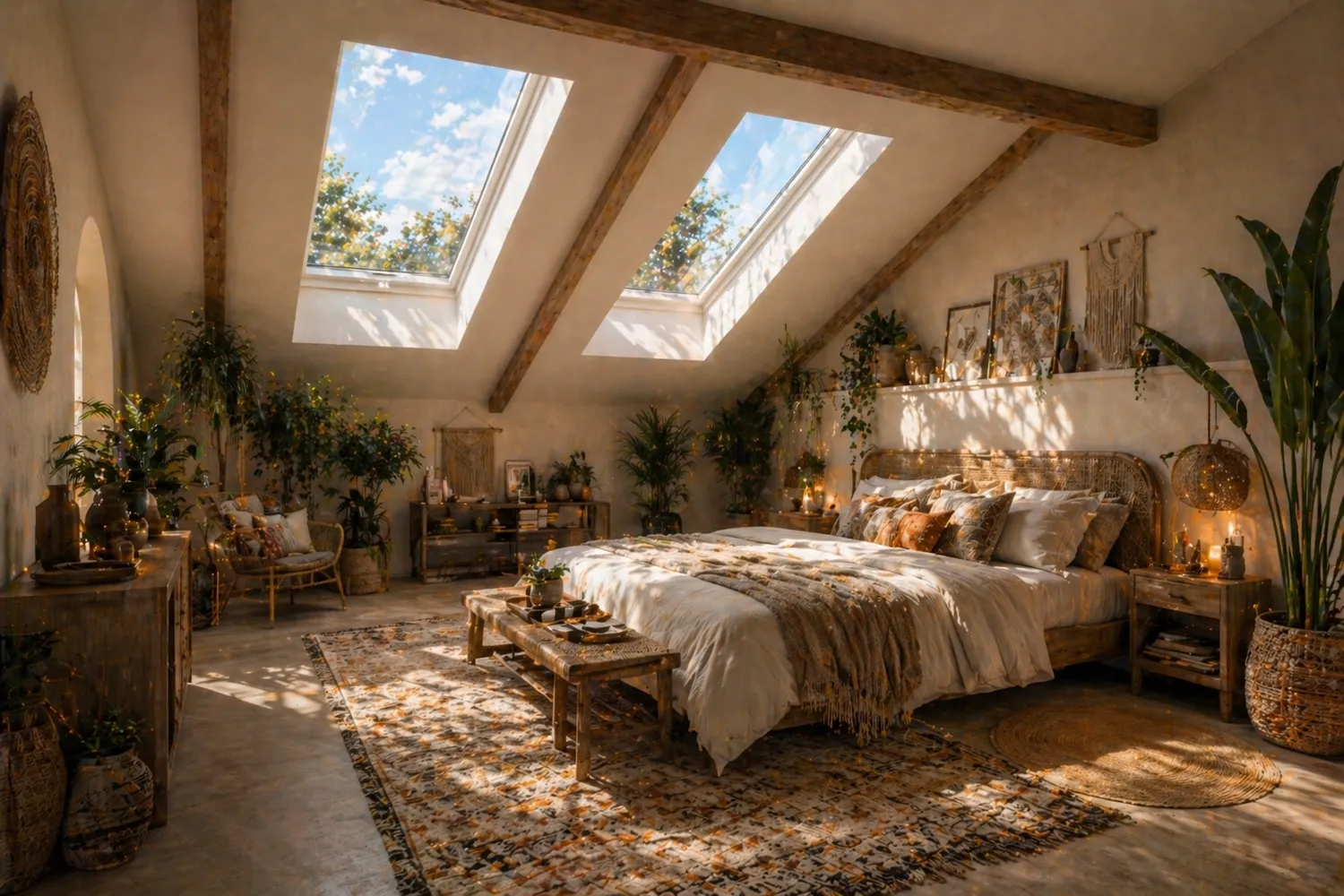
Today, boho places special emphasis on natural light and organic materials. Skylights serve as a tool that enlivens every object, subtly shapes the visual rhythm, and naturally enhances textures. Sunlight streaming through these openings plays across woven chairs, rugs, and decorative elements, making the space feel harmonious and light.
The Influence of Light on Textures and Materials
Natural materials are the foundation of boho. Woven furniture, rugs, fabrics, and decorative elements respond especially well to light. Colors become brighter and richer, contrasts deepen, and shapes and textures gain dimension. Overhead light makes each object stand out on its own, while still keeping the room visually balanced.
Tip: Place mirrors opposite skylights to reflect light throughout the room and expand the space.
Practical Advice
If you want to fill your home with natural light through overhead lighting, keep a few key points in mind:
1. Type of Glass and Light Control
Choose glass that lets in soft daylight. Energy-efficient solutions maintain warmth in winter and coolness in summer, making the light gentle without harsh glare. Built-in shades or screens help adjust light intensity at any time of day.
2. Placement and Number of Skylights
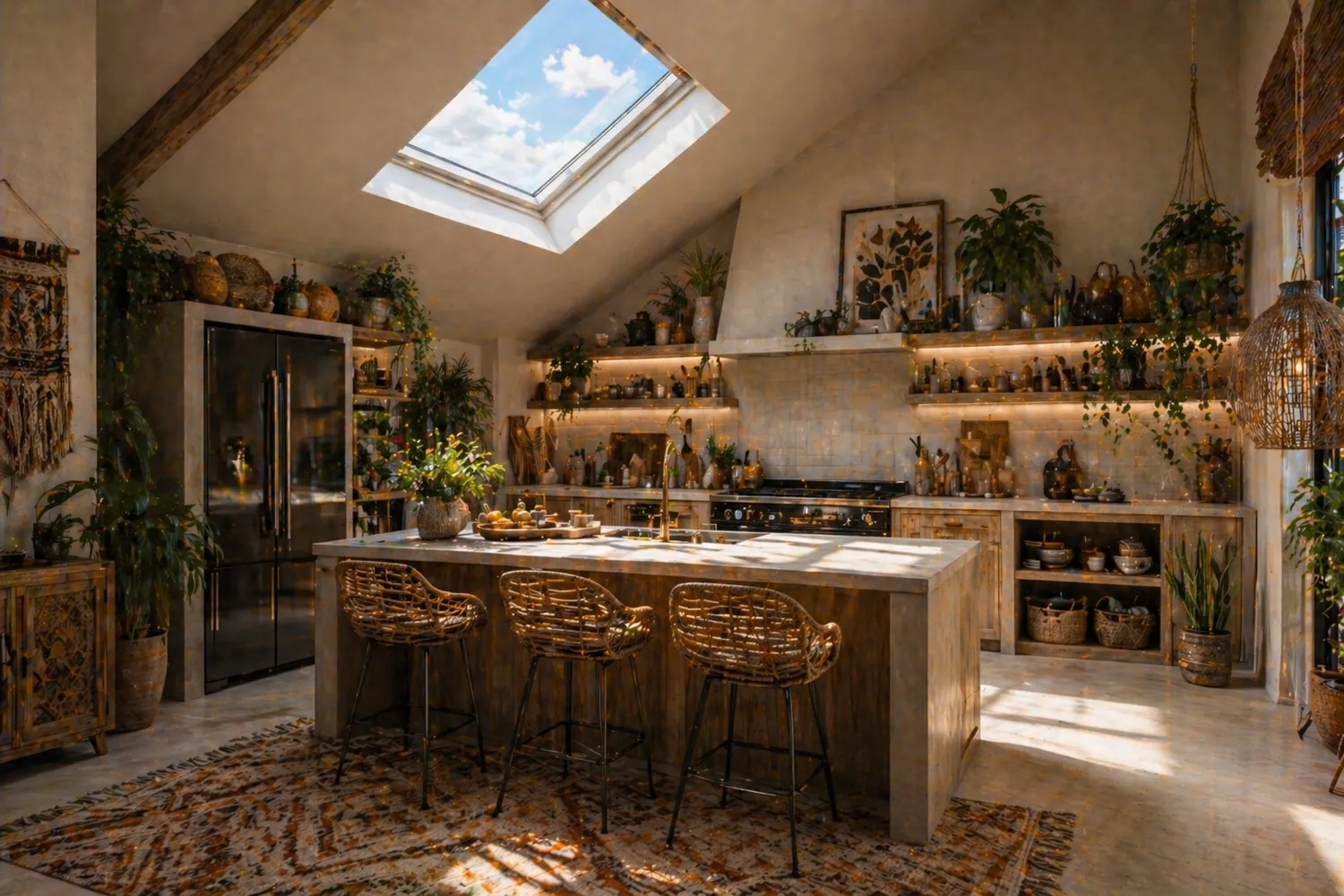
Consider where light will most effectively enhance the interior. North-facing windows provide soft, even light that beautifully highlights rug and fabric textures, while south-facing ones create bright, lively accents. Multiple smaller skylights make lighting more dynamic and create gentle shadows.
3. Light in Different Rooms
Even if direct roof access is limited, use light tunnels. They bring daylight to hallways, bathrooms, and smaller rooms, enlivening every corner.
4. Fresh Air and Comfort
Some skylight designs can be opened to allow a gentle flow of fresh air. This is especially pleasant in summer and helps create a cozy, lively atmosphere.
5. Planning with a Professional
Discuss the selection and placement of skylights with experienced specialists. They can help choose windows that highlight textures, create harmony and comfort, and remain safe and practical.