
Art Nouveau and Skylights: Geometry and Light
Today, designers are increasingly drawn to the aesthetics of Art Nouveau. Its flowing lines, botanical motifs, and refined ornamentation find a new expression in contemporary apartments, houses, and public spaces.
Top lighting plays an important role in interiors. When daylight gently filters into a living room with a skylight, the space comes alive. Stained glass and curved surfaces respond differently to daylight throughout the day, producing shifting reflections and shadows.
Modern technology enhances this effect. Skylights become a tool through which designers highlight artistic details and the architectural rhythm.
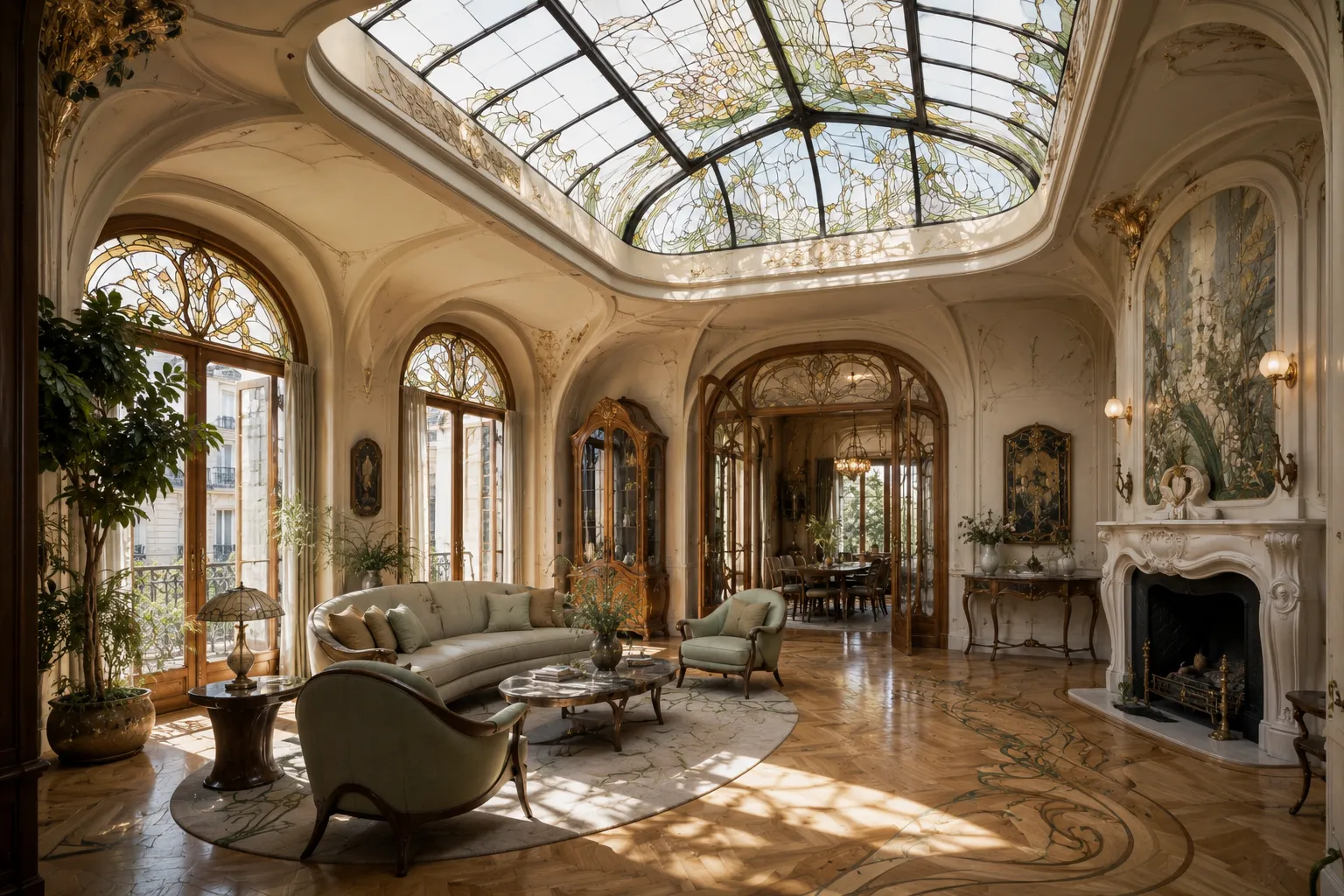
The History of Art Nouveau: From Lines to Organic Forms
At the turn of the 19th and 20th centuries, Europe gradually moved away from heavy academic styles, opening the way to a design language inspired by nature and fluid forms. Art Nouveau aimed to integrate art into everyday architecture and design.
Among the pioneers of the style were the painter Gustav Klimt and architects Antonio Gaudí and Victor Horta. Klimt created decorative works that inspired designers with flowing lines, botanical motifs, and ornamentation. Gaudí designed houses where every detail was seamlessly integrated into the overall composition, and Horta transformed walls and staircases into living objects, where forms, light, and shadows constantly interacted.
A defining feature of the style is attention to detail. Every line carries rhythm, every form echoes natural harmony. Materials such as glass, wrought iron, wood, and tile are combined to create a unified and harmonious aesthetic.
Art Nouveau Interiors: The Play of Form and Light
Art Nouveau interiors captivate with their fluidity. Furniture seems to flow through the space. Curved ornamentation and stained glass make otherwise static interiors appear more dynamic.
Modern living spaces incorporate skylights with home air conditioning, allowing for a comfortable indoor climate. The interior achieves a balance between brightness and material richness. Natural light reveals the texture of walls and decorative surfaces more effectively than artificial lighting.
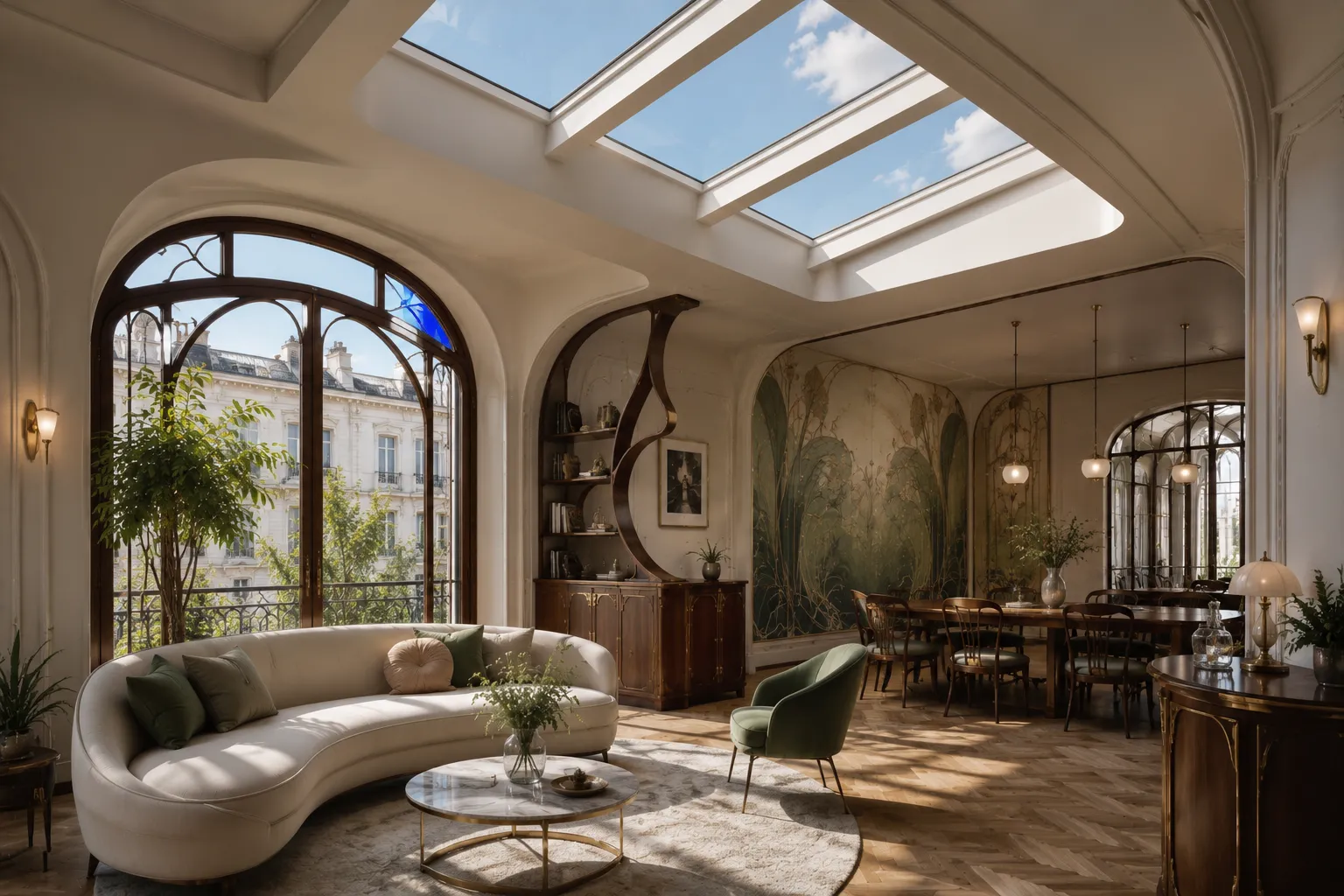
Completed Projects with Art Nouveau and Skylights
The 19th-century mansion Casa Batlló in Barcelona is one of the most famous examples of Catalan Modernism, fully redesigned by Antonio Gaudí in the early 20th century. During the renovation, Gaudí introduced organic forms, curved walls, and integrated lighting solutions. Light wells, acting as natural skylights, bring daylight deep into the interior, where it reveals the structure and depth of the space.
In Budapest, the Museum of Applied Arts, designed by Victor Horta and Gyula Partos, demonstrates how skylights can be harmoniously integrated into public spaces. The central atrium, topped with a large skylight, evenly illuminates the interior and the decorative art collections. The project shows how historic architecture uses top lighting to enhance artistic details and create an emotional impact.
In Art Nouveau interiors, daylight is used to emphasize ornamentation, texture, and curved forms.