
Skylights in a pitched roof: light in the interior of the home
In Los Angeles, pitched roofs have long been part of the city’s landscape. They are found in a wide range of neighborhoods, from quiet residential streets to modern districts.
The pitched roof forms the upper volume of the building, defines its silhouette, and makes the architecture cohesive.
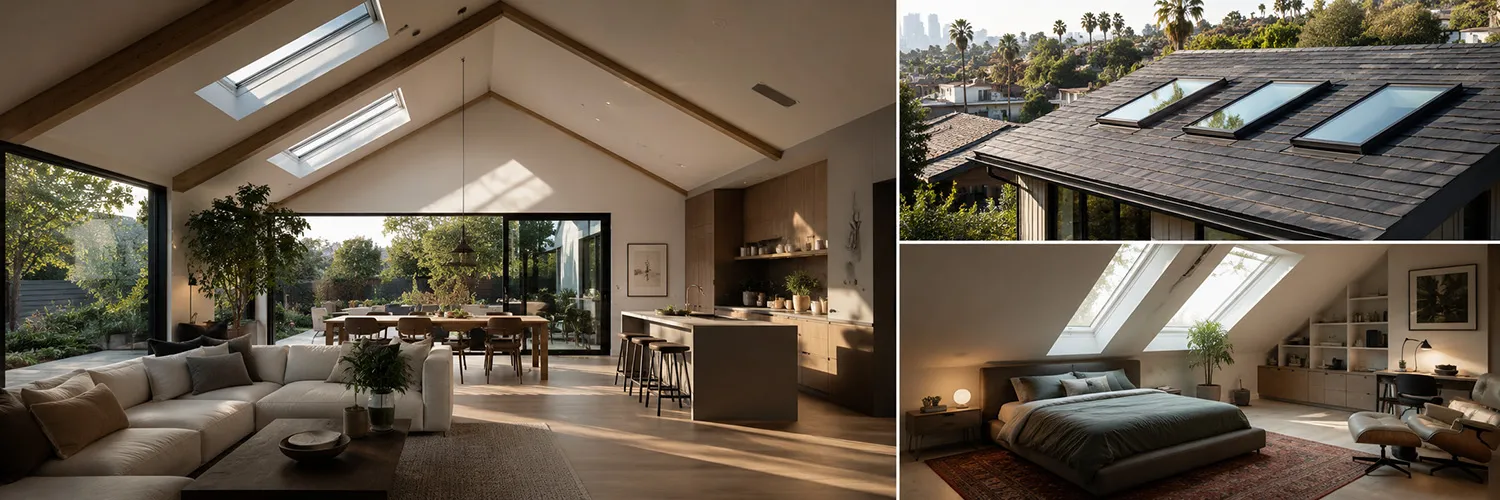
Pitched Roofs in California’s Climate
Architecture in Los Angeles has always been shaped by the local climate. High solar exposure and long daylight hours determine the external appearance of houses as well as their interior organization.
Pitched roofs create a natural air layer under the roof, through which warm air rises and is partially vented through ventilation elements. This reduces overheating of interior spaces and maintains a more stable temperature throughout the day.
The space under the roof is used as a living level. Bedrooms, offices, and private rooms are located here, where ceiling height and the character of light can vary depending on the geometry of the slope.
Impact on Layout
Because of the roof slope, the interior feels different. Rooms have varying heights, which affects how they are used.
Higher sections are used for primary areas: bedrooms, offices, and living rooms. Lower sections are used for built-in storage systems and auxiliary spaces.
The roof form also affects the placement of skylights. They are integrated into sloped surfaces, so light enters at different angles, changing the character of illumination throughout the day.
Skylights and Natural Light
Skylights in pitched roofs work closely with their form. When integrated into the slope plane, light gently enters the interior at the same angle, echoing the roof geometry and distributing evenly across surfaces.
In other cases, skylights are used as separate light sources directed at specific zones: kitchen island, desk, or the center of a room. This approach allows for subtle spatial zoning without partitions.
Orientation to the cardinal directions determines how natural light behaves inside the home. Morning and evening light differ in intensity and angle, so the space looks different throughout the day.
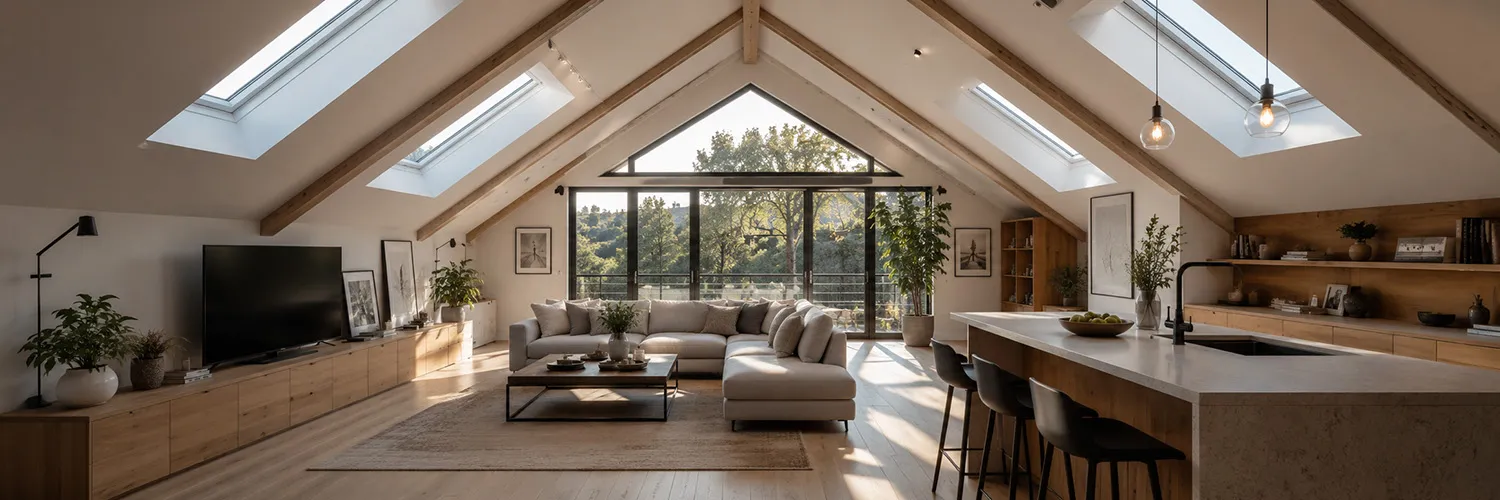
Climate Nuances and Engineering Precision
In Los Angeles conditions, skylights are designed based on roof pitch and building orientation. The south side receives more intense light, and the north side receives softer, more diffuse light.
Multi-layer glazing with Low-E coating and argon filling is used to control heat load. This helps reduce heat gain and maintain a comfortable indoor climate.
Equally important is integration into the roof. The precision of flashing details, airtightness, and a well-planned drainage system determine how long the system will perform.
As a result, light becomes part of the architectural composition. It influences the atmosphere and how the interior feels.