
VELUX TZR: Fire-Resistant Light Tunnel for California
The VELUX TZR light tunnel with enhanced fire resistance is designed in accordance with strict building codes, including requirements for Wildland Urban Interface zones in California.
These areas were introduced into regulation in 1999 due to the challenging natural conditions in Los Angeles. Strong winds and mountainous terrain create challenging fire conditions.
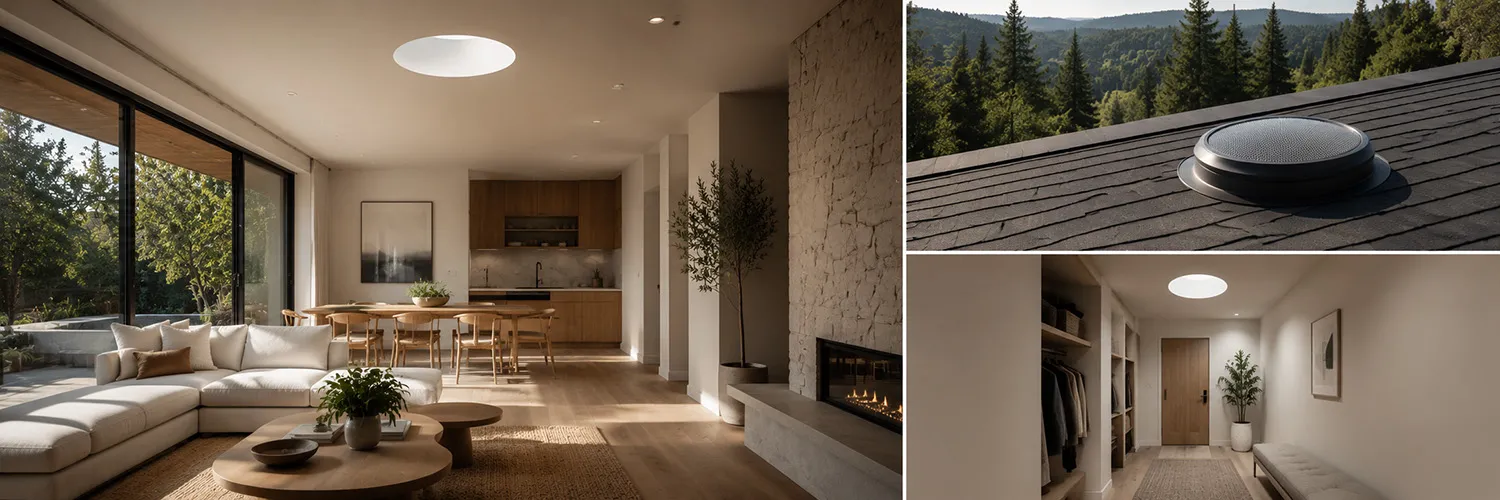
Despite these regulations, one of the largest wildfire outbreaks in Los Angeles history occurred in January 2025. The fires spread quickly under strong Santa Ana winds.
The natural disaster affected tens of thousands of acres, destroyed around 16,000 residential and commercial buildings, and resulted in the deaths of 31 people.
Fire Resistance and Compliance with ASTM E108 Class A Standard
The TZR light tunnel is designed with fire safety requirements in mind and demonstrates resistance to extreme fire exposure.
In accordance with CBC Chapter 7A (Title 24, WUI), light systems in California must use tempered or laminated glass, non-combustible frames, and a 1/8-inch metal mesh protection for operable constructions.
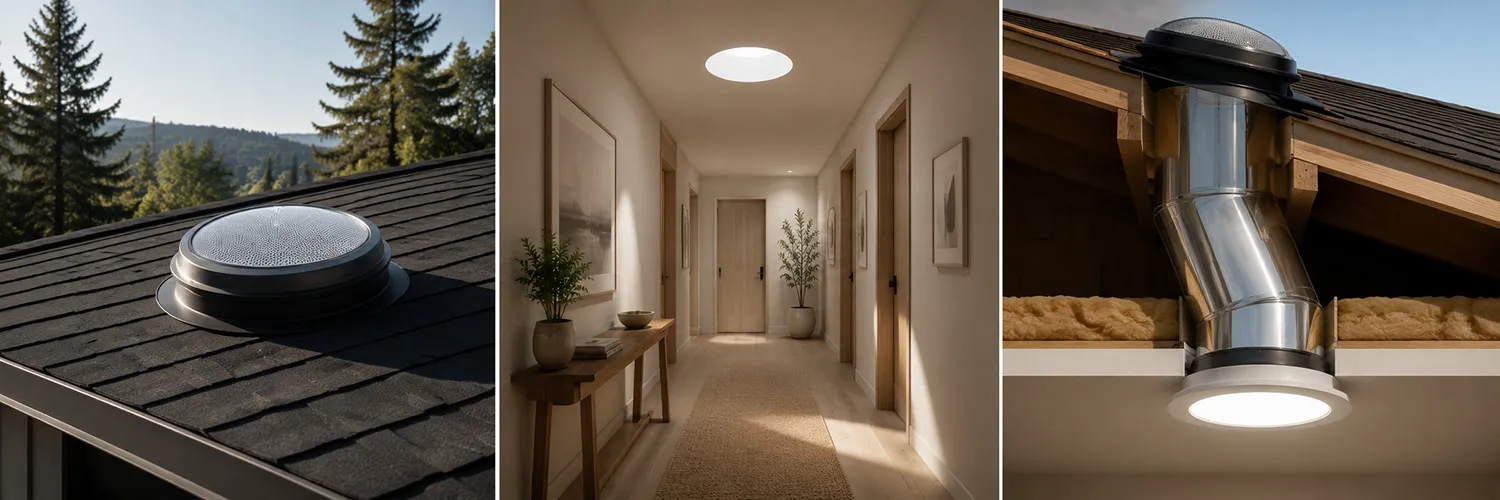
The TZR fully complies with these requirements and includes fire-resistant tempered glass with wire mesh, an aluminum reflective tunnel, and a metal top structural element.
To achieve Class A under the ASTM standard, the TZR light tunnel is tested using a burning wooden element weighing 2000 grams.
To pass the test, the system must prevent fire penetration, not allow flame to appear on the interior side, and show no spread of fire or sparks for 1.5 hours.
The TZR light tunnel meets Class A requirements.
Functionality and Role in Modern Architecture
The TZR light tunnel is not limited to fire safety alone. It also contributes to improved energy efficiency and natural daylighting.
A single 10 inch diameter tunnel can transmit up to 6500 lumens in sunny weather. This is comparable to the output of two and a half 100 watt incandescent bulbs. Even on cloudy days, it provides about 440 lumens, similar to a 60-watt bulb.
As a result, reliance on artificial lighting is reduced, with usage decreasing by around 3–5 hours per day depending on conditions.
The light tunnel also supports an architectural approach focused on strengthening the connection between people and nature. Natural daylight makes the interior more expressive and comfortable to experience.
Optimal Installation Areas
TZR light tunnels are commonly installed in corridors, closets, and stairwells, although they can be used throughout the home.