
Skylights: How Light Shapes the Perception of Color
In interiors, color rarely exists in isolation. It is only revealed in the presence of light through reflection from surfaces. The same material can look soft in the morning, more saturated during the day, and deeper in the evening. At the same time, the hue itself remains unchanged, while the light that defines it changes.
In design, daylight is considered a basic reference point for evaluating color. In colorimetry, the D65 standard is used, a model of average daylight. It is used as a basis for developing paints, materials, and digital color reproduction.
For this reason, evaluating color in interiors is always connected to how light behaves in natural conditions, particularly in the sunny climate of Southern California.
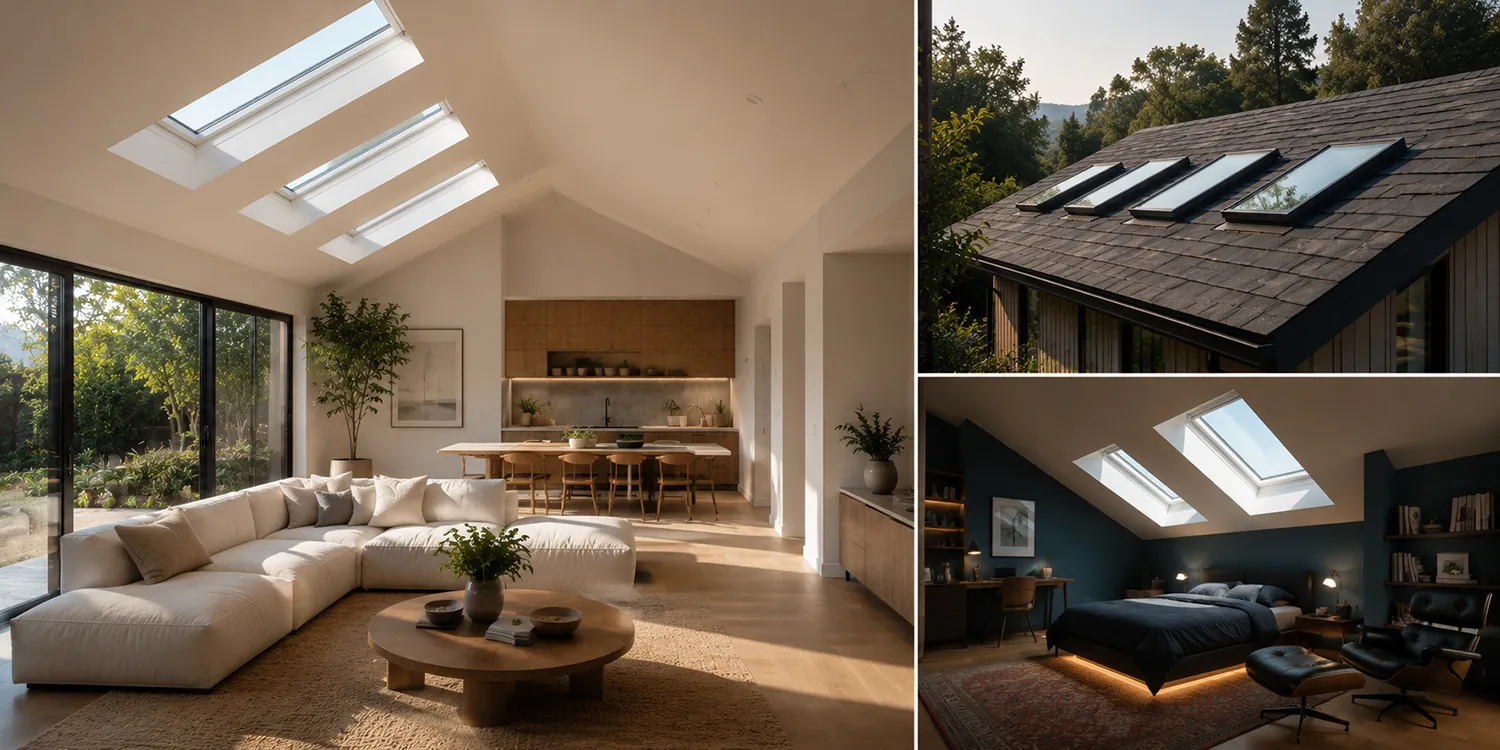
Overhead Light and the Structure of Space
Skylights change the structure of lighting. Light enters from above and is distributed evenly throughout the space.
In urban interiors, light from windows passes through multiple reflective surfaces, including glass, facades, and neighboring buildings. It becomes uneven and diffused.
Light entering living spaces through skylights works differently. It passes through fewer reflections and enters the room almost directly. This creates a more unified perception of the interior, where light is distributed evenly without pronounced lighting accents.
Why Does Color Change under Different Lighting?
Even the same color can look different under changing light. Under warm light, it appears softer and warmer, while under cool light, it looks stricter and higher in contrast.
The effect is often noticeable on materials with subtle tonal nuances, such as painted walls, textiles, and natural surfaces.
Skylights help keep these changes more consistent. Thanks to more even daylight, color is perceived more consistently throughout the day and depends less on local light sources or reflections inside the space.
Shades and Their Behavior in Daylight
Complex colors are highly sensitive to lighting. Small changes in the light spectrum can shift perception toward warmth or coolness.
With overhead daylight through skylights, light is distributed more evenly across the entire space. Fewer reflections from walls and objects reduce random color distortions. As a result, shades appear more predictable and natural throughout the day.
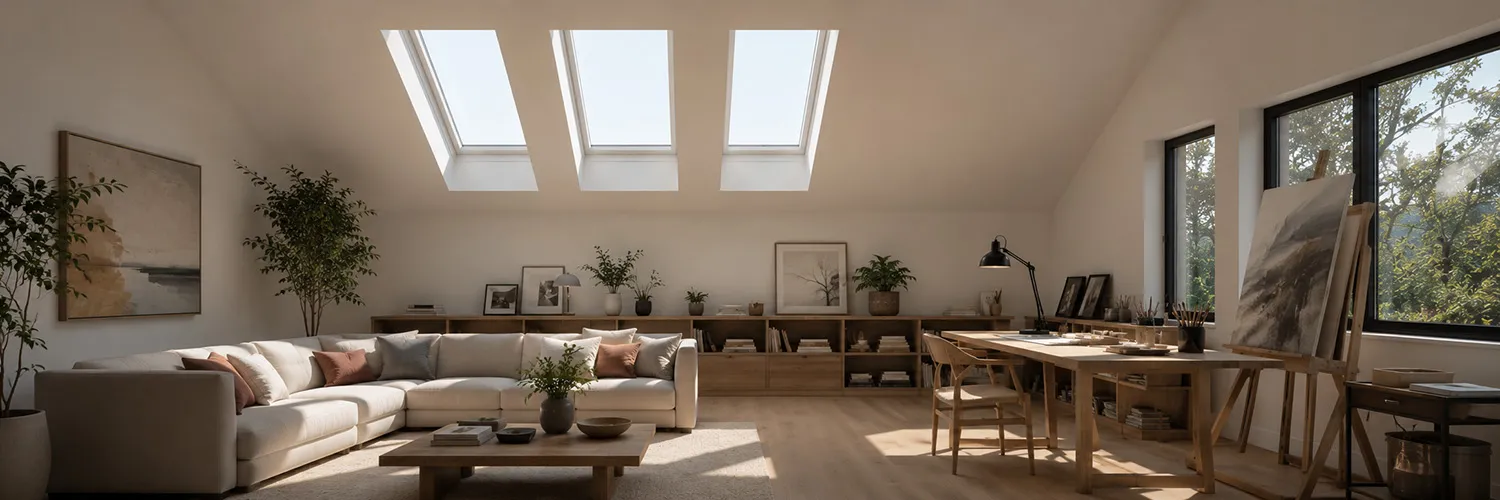
How Color Changes during the Day
Color in interiors changes gradually along with natural light. In the morning, tones appear softer and calmer. Surfaces look slightly warmer, contrasts are lower, and the space feels more relaxed.
During the day, lighting becomes more neutral, and color is revealed most accurately. In the evening, a warmer spectrum returns, enhancing depth and softness in the space. With skylights, these changes remain smooth and even. Light is distributed more consistently, and the interior is perceived without abrupt visual transitions.