
Sun Tunnels for ADUs in California and Natural Light
ADUs in California are no longer a rarity. Small detached homes on the same lot as a primary residence are appearing in suburbs, dense urban areas, and backyard spaces. They are used as guest houses, studios, rental units, or workspaces.
Compact ADUs have one typical issue. Interior spaces are often left without windows. Hallways extend deep into the layout, bathrooms end up in the center, and utility areas are deprived of daylight.
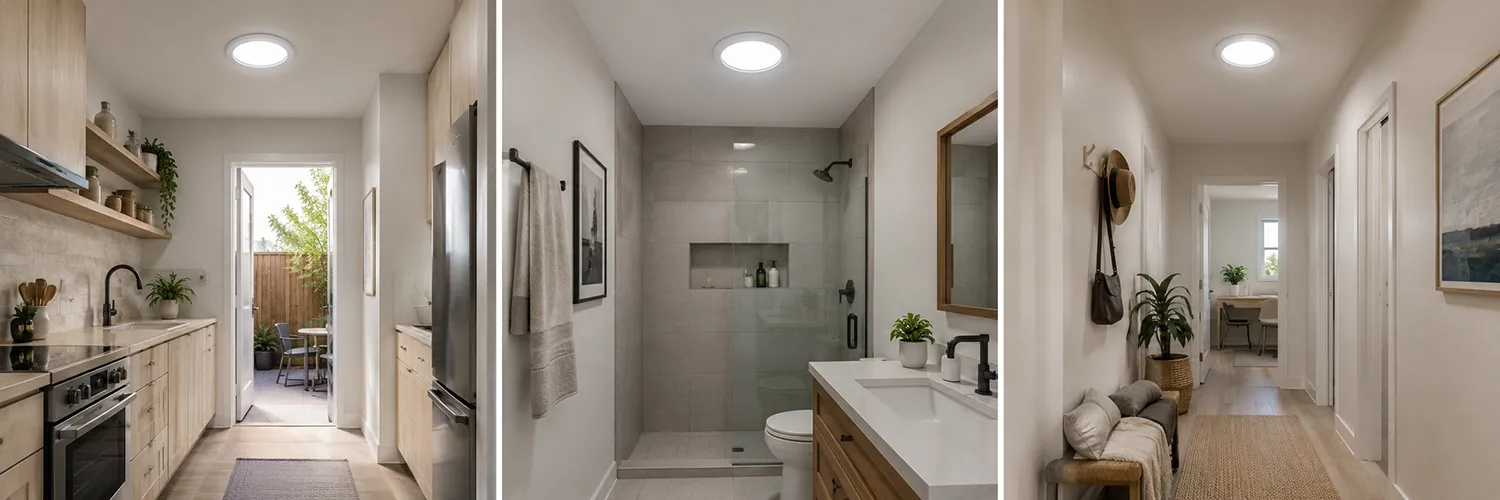
In compact spaces, it is daylight that creates a sense of volume and depth. When natural light for ADUs is limited, interiors quickly lose cohesion and feel less harmonious.
When traditional windows cannot be added, VELUX Sun Tunnel is used, through which daylight is transferred from the roof into the interior without changing the building facade.
How Sun Tunnel Works
The VELUX Sun Tunnel works as a light channel between the roof and the ceiling of the room. A small dome is installed on the roof, collecting daylight, which passes through a reflective tube and enters the room through a clean ceiling diffuser.
The system directs light into areas where window installation is not possible. The construction can be straight or curved. The rigid version is used where the distance from roof to ceiling is minimal. The flexible version is suitable for more complex areas where structural elements need to be bypassed.
Light intensity depends on the length and geometry of the tube, as well as the angle and placement of the roof dome. These parameters determine how much daylight reaches the interior.
The tube diameter is selected based on the needs of the space. The larger it is, the higher the light output inside the space.
Why ADUs in California Are Sensitive to Light
Backyard cottages in California are often designed on limited lot areas. Architects try to preserve as much usable interior space as possible, so windows do not always solve the lighting challenge.
An additional constraint comes from building density. ADUs are often located near the main house or close to property boundaries, which limits facade glazing options.
Sun Tunnel does not require wall extensions or facade changes. ADU natural lighting is introduced through the roof while maintaining the integrity of the structure.
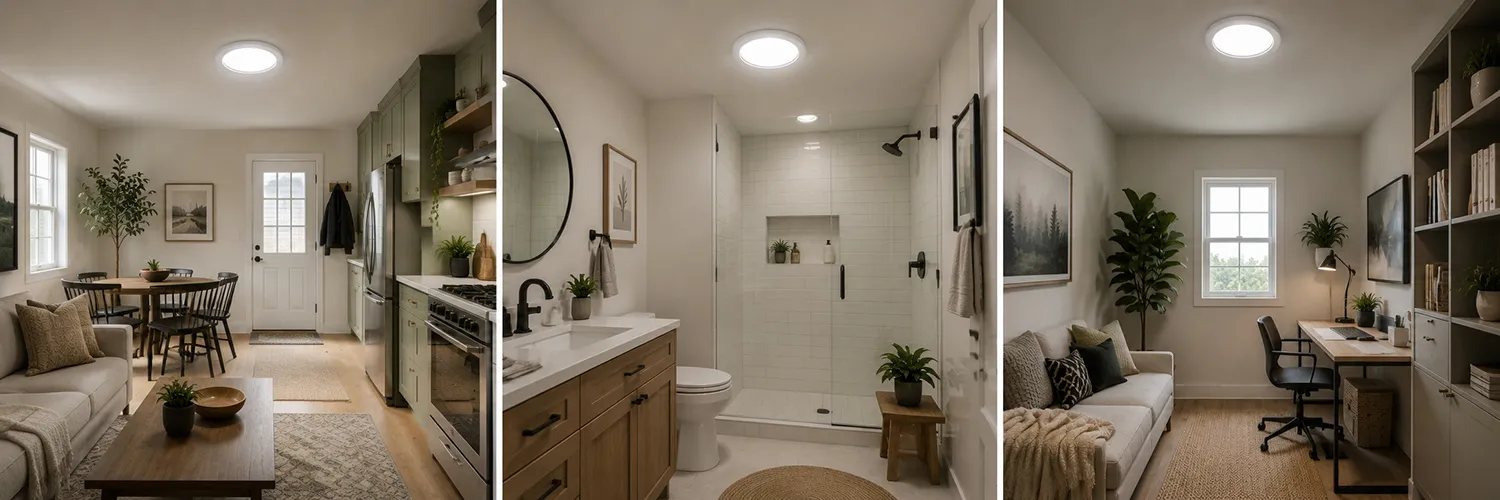
Details That Shape Light Quality
Several design factors influence how a Sun Tunnel performs.
Tube length directly affects the amount of light reaching the space. The longer the tube, the greater the reduction in light output. Bends inside the system can also reduce light flow, as even slight curves affect the intensity of daylight.
The roof surroundings also affect performance. Shadows from neighboring buildings or trees can reduce the amount of direct daylight reaching the dome.
The placement of the roof dome determines how the Sun Tunnel performs throughout the day, affecting both the amount and distribution of light inside the space.