
Daylighting vs. Artificial Lighting: Which Is Better?
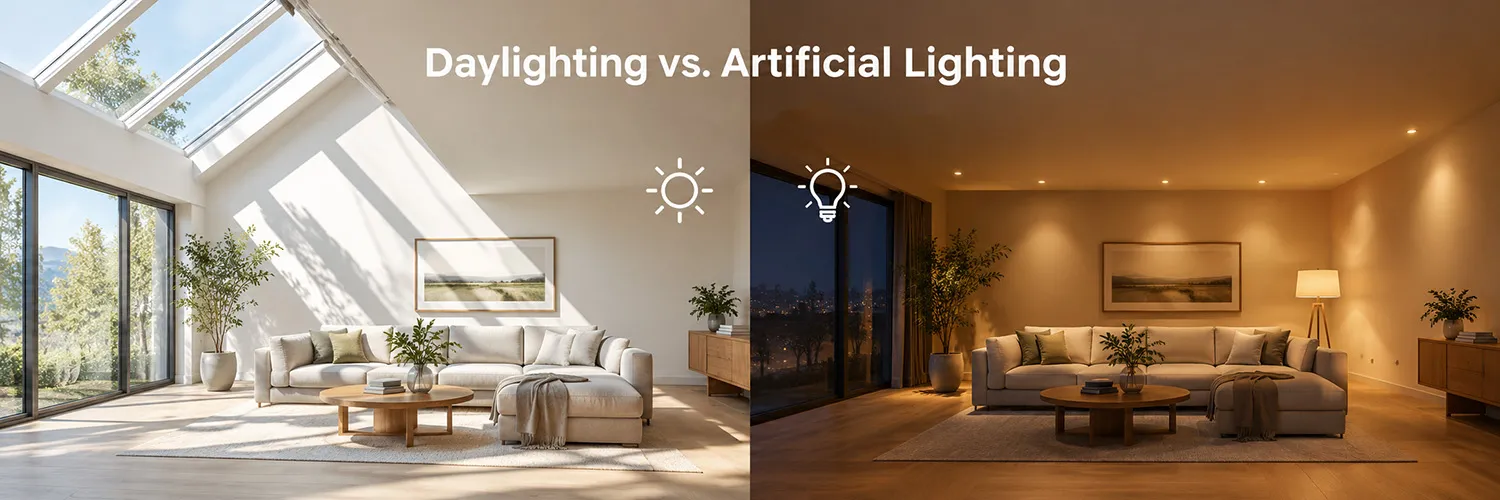
Lighting can dramatically change how a room feels. In the morning, a room with large windows may feel spacious and fresh. In the evening, the same room can look completely different, especially if the only light left on is a ceiling fixture.
When choosing lighting, a natural question comes up: natural light vs. artificial light, which option is better for a particular space? There is no single answer. It depends on the room, the time of day, and how the space is used.
One simple rule is worth keeping in mind: make the most of natural light during the day, and plan artificial lighting so that it complements daylight comfortably and takes over once it gets dark.
What Is Natural Light?
Natural light is daylight that enters a room through windows, glass doors, skylights, and other openings. The amount and intensity of natural light change throughout the day.
In the morning, the sun may light a room from one side. During the day, the light becomes brighter and more even, while toward evening, its intensity gradually decreases. Other factors also affect the amount of light, including the time of year, cloud cover, window orientation, and surrounding buildings.
For example, south-facing windows typically receive more direct sunlight throughout the day. North-facing windows provide softer, more diffuse light. East-facing windows get more morning light, while west-facing windows receive more light in the afternoon.
What Is Artificial Lighting?
Artificial light comes from electrical sources such as ceiling fixtures, wall sconces, floor lamps, table lamps, built-in lighting, and other fixtures.
The main advantage of artificial lighting is that you can control it based on the situation. You can turn on a single light for a quiet evening, add focused lighting over a work area, or brighten the room once it gets dark outside.
Brightness and color temperature influence how well artificial lighting suits a particular room. A workspace generally requires brighter, more focused illumination. Bedrooms and relaxation areas benefit from softer light. Different fixtures can serve different purposes: a ceiling light provides general illumination, and a table lamp or wall sconce offers focused light for reading or working.
Natural Light: Advantages and Disadvantages
When we talk about the benefits of natural lighting, we are primarily referring to the way daylight affects how we experience a space and how comfortable it feels in everyday life. Daylight is constantly changing, which gives an interior a different feel throughout the day.
Natural light also shows the true colors of walls, furniture, and textiles. When a room gets plenty of daylight, it can also reduce the need for artificial lighting.
However, overcast weather, shorter winter days, or buildings that block the windows can quickly change the amount of available daylight. In summer, direct sunlight can also create glare on screens and cause a room to overheat.
Artificial Light: Advantages and Disadvantages
Artificial lighting is much more predictable. You can get the amount of light you need in the evening, at night, or in a room without windows.
Light fixtures also make it possible to create different lighting setups. For example, a kitchen can have bright task lighting over the work surface, a living room can use softer light from a floor lamp, and a separate lamp can provide focused light for reading next to an armchair.
There is a downside, though. Poorly chosen lighting quickly becomes noticeable. For example, a light that is too bright in a bedroom can feel harsh in the evening. Cool white light in a cozy relaxation area can make the space feel less warm. Insufficient lighting at a desk can also strain your eyes and make you constantly adjust your position to see more comfortably.
Natural Lighting vs. Artificial Lighting: Which Is Better?
When choosing between the two, natural light should generally be used as much as possible during the day. However, its availability depends on the time of day and the conditions outside.
The main advantage of artificial lighting is control. You can turn it on at any time, direct it toward a kitchen countertop, desk, or bookshelf, and lower the brightness in the evening. You can also add more light to a work area or leave a soft light on for relaxation.
Tip: For most spaces, the best approach is to combine both types of lighting.
How to Combine Natural and Artificial Light
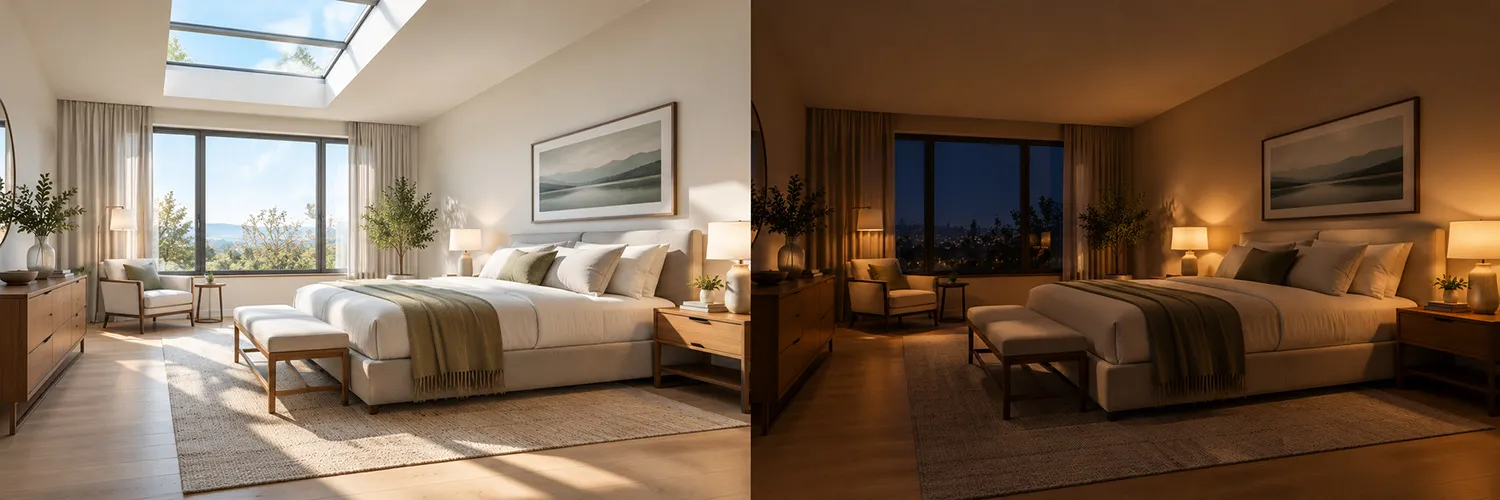
During the day, make the most of natural light and use artificial lighting where additional light is needed. For example, a kitchen may benefit from task lighting over the work surface, an armchair can have a floor lamp for reading, and a small lamp can be placed next to the bed.
Furniture placement also affects how daylight reaches a work area. A desk is best positioned so that daylight falls from the side and does not create glare on the screen. If a room has a dark corner, that is a good place to add an additional light source.
The goal is not to choose between natural and artificial light, but to use each where it works best.