
6 Ways to Bring More Natural Light Into Your Home
Light has a major impact on how we perceive our homes. The same room can feel spacious and fresh in the morning and completely different by evening. And it is not always about the size of the windows. Sometimes natural light is simply blocked by furniture, heavy curtains, dark finishes, or an inefficient layout.
However, creating a brighter interior does not always require a major renovation. Sometimes all it takes is clearing the windows, changing the finishes, removing obstacles that block the light, or bringing more light into the darkest areas of the home.
Below, we will look at six ways to improve natural light in your home and make better use of it.
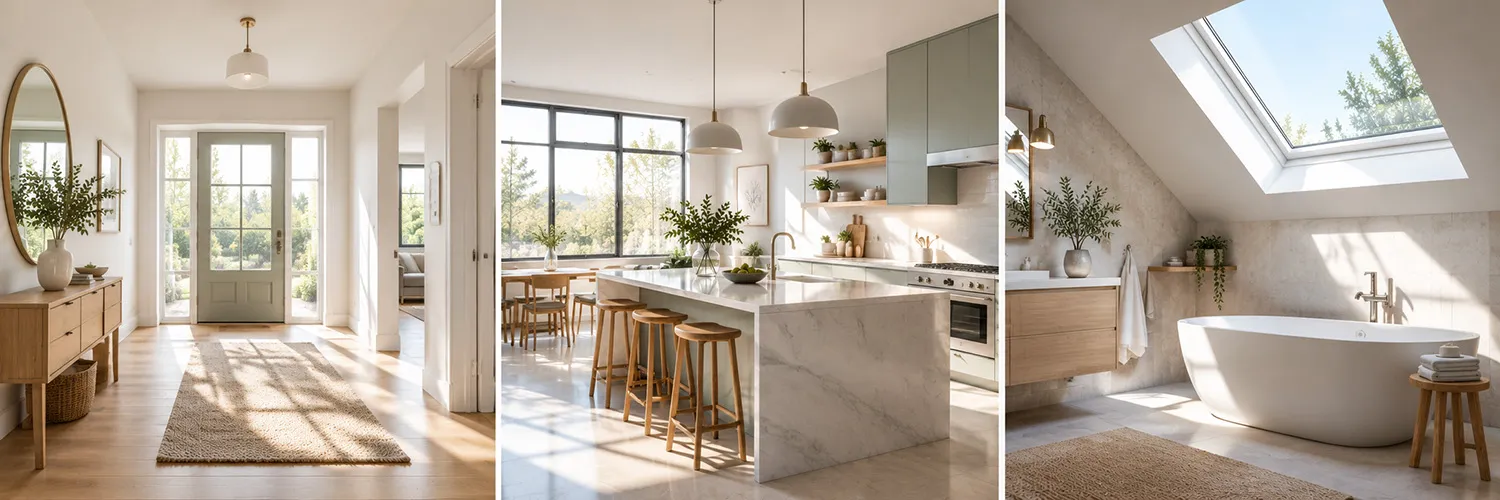
1. Clear the Windows and Keep the Path of Light Open
Start with the simplest step: look at what is preventing natural light from entering the room freely through the windows. In smaller rooms, even a single piece of furniture placed near a window can noticeably reduce the amount of daylight reaching the interior.
Try moving large pieces of furniture farther away from the windows. Heavy fabrics can be replaced with lightweight, semi-sheer textiles. And do not forget about clean windows. Dust and buildup on the glass may seem insignificant until you compare the room before and after cleaning.
2. Choose Surfaces That Reflect Natural Light
Light-colored walls reflect more daylight than dark finishes. White, cream, and pale neutral shades can make a room appear brighter, even with limited direct sunlight. This can be useful in rooms with north-facing windows, where daylight is generally more diffuse.
A light-colored ceiling reflects daylight back into the room. Flooring and other interior surfaces can also contribute to the distribution of light, depending on their color and finish. There is no need to make the entire interior white. Lighter materials can be introduced in areas that receive less daylight, offering simple ways to brighten your home with natural light without a major renovation.
3. Place Mirrors Where They Can Reflect Light
The placement of a mirror makes a big difference. If you position it across from a window or at a slight angle to it, the mirror can reflect natural light back into the room. A large mirror can redirect light toward parts of the room that receive little daylight from the windows.
4. Remove Obstacles That Block Light Inside the Home
Natural light can enter one room beautifully and barely reach the next.
Consider a typical layout: a bright kitchen with a large window, next to a dark hallway and a windowless entryway. If there is a solid wall and a heavy door between them, the kitchen’s natural light effectively stops at the threshold.
In this situation, look at what is preventing the light from traveling farther. A solid door can be replaced with a model that has a glass insert, while a partially glazed partition can be used between rooms if the layout allows for it. In some cases, simply leaving the doorway open may be enough.
Glass works particularly well when you want to maintain separation between spaces without blocking access to natural light. If privacy is needed, frosted glass can be a good option for a bedroom or bathroom.
Do not forget about furniture, either. Tall cabinets and shelving units placed near windows or doorways can block a significant amount of natural light. Lower furniture leaves more open space and allows light to reach deeper into the home. These solutions are often used as effective ways to maximize daylight in a home without a complete remodel.
5. Add Overhead Natural Lighting to Dark Spaces
Some rooms simply cannot be adequately lit with conventional windows. In the center of a home, on an attic level, or in a space with limited exterior walls, there may not be enough natural light to begin with.
Overhead glazing offers another option. VELUX Skylights bring daylight through the roof into rooms with limited access to exterior windows. For small, dark areas, Velux Sun Tunnel systems can bring sunlight through a specially designed reflective tube that runs from the roof to the ceiling of the room.
This type of solution requires more extensive planning. You need to consider the roof structure, the location of the rafters, insulation, weatherproofing, and local building codes. However, for a dark bathroom, walk-in closet, hallway, or other space without a full-size window, it can completely change how the space feels.
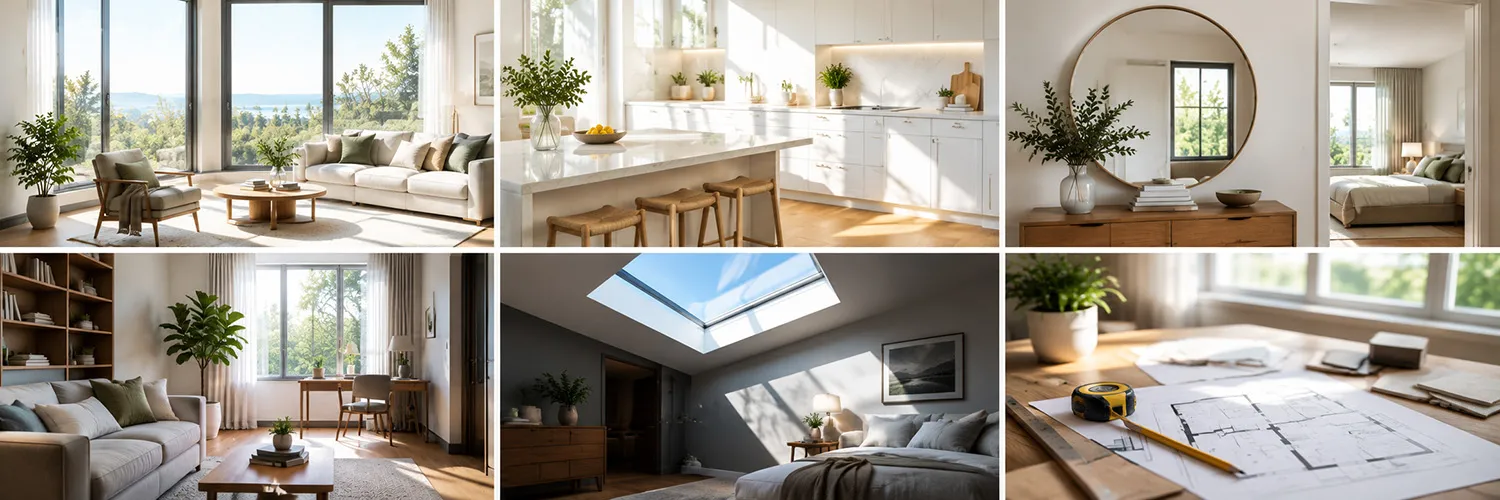
6. Plan for Natural Light Before You Renovate
If you are planning to change the layout or build a home from scratch, natural light should be considered well before you choose the wall colors. Look at which direction the windows face and what time of day each room receives the most sunlight. East-facing bedrooms and kitchens receive direct sunlight in the morning. South-facing windows typically receive plenty of light throughout the day, and north-facing windows provide softer, more even illumination.
If you want to understand how to maximize daylight in your home, observe the space at different times of day. A room that looks bright at noon may be dark in the morning. Window placement should be considered alongside the floor plan and interior finishes to make better use of available daylight.