
Brutalism and Skylights: Architecture of Contrast
Brutalism is defined by exposed concrete, heavy forms, and sharp geometry. These buildings often feel monumental and visually dense. Skylights reduce the perceived mass of the concrete volumes.
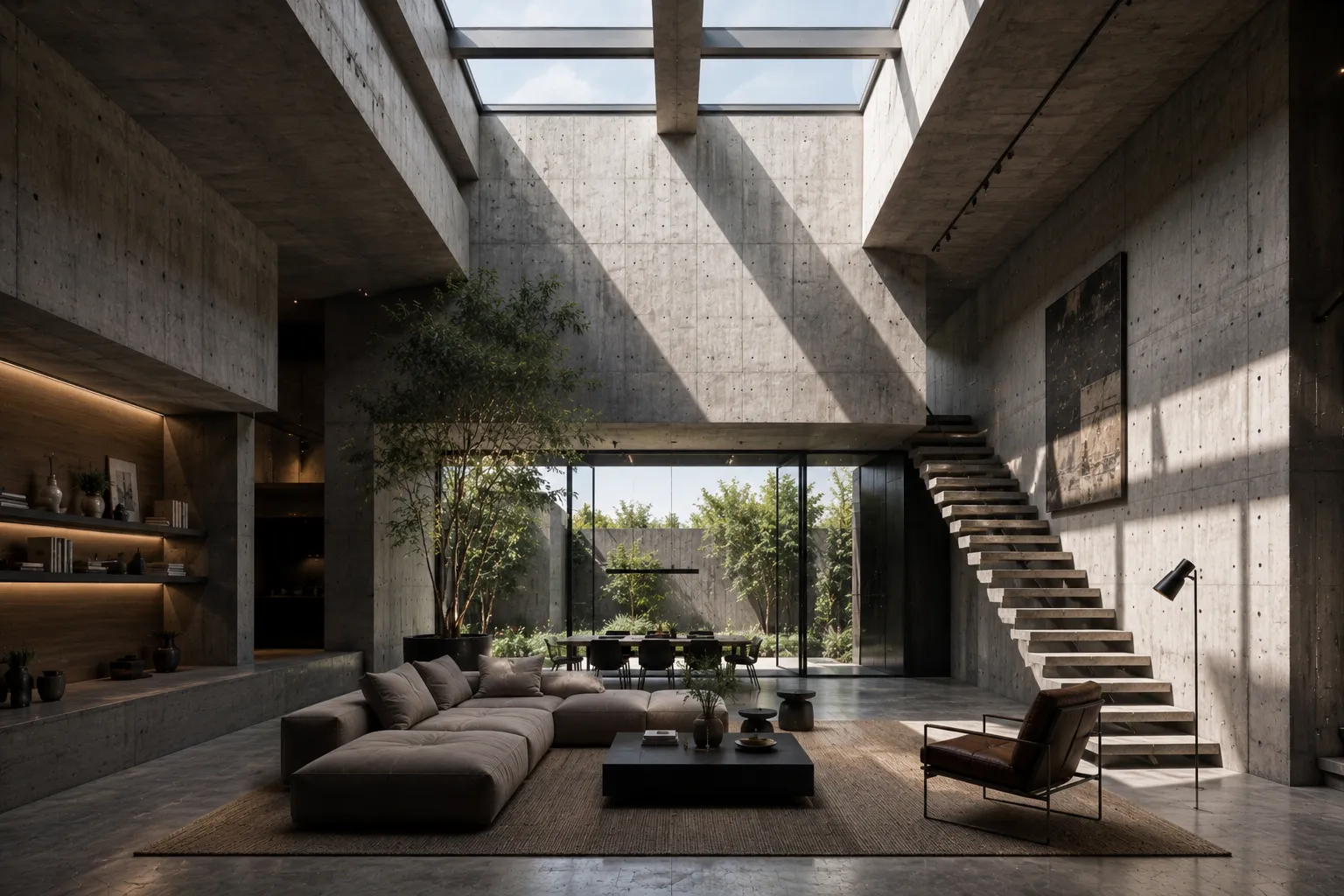
Imagine a spacious hall with high ceilings. A shaft of light passes through a glass opening, casting shadows across the concrete surfaces. In the living room, this kind of lighting changes the perception of the room’s scale. Skylights in the living room let daylight in, illuminating the area and revealing the texture of the concrete.
History and Philosophy of Brutalism
Brutalism emerged in the mid-20th century. Architects of the time aimed to show materials as they are, leaving texture and structure exposed. Buildings looked austere, sometimes even aggressive.
Form and texture define the character of the space. Massive walls and deep shadows emphasize the structural character of the building.
Contemporary interiors often reinterpret these ideas for residential use. Natural light softens the heaviness of brutalist spaces, making them more livable. Skylights in the bedroom bring in soft daylight from above and create a quieter, more private atmosphere.
The Role of Light in Brutalism
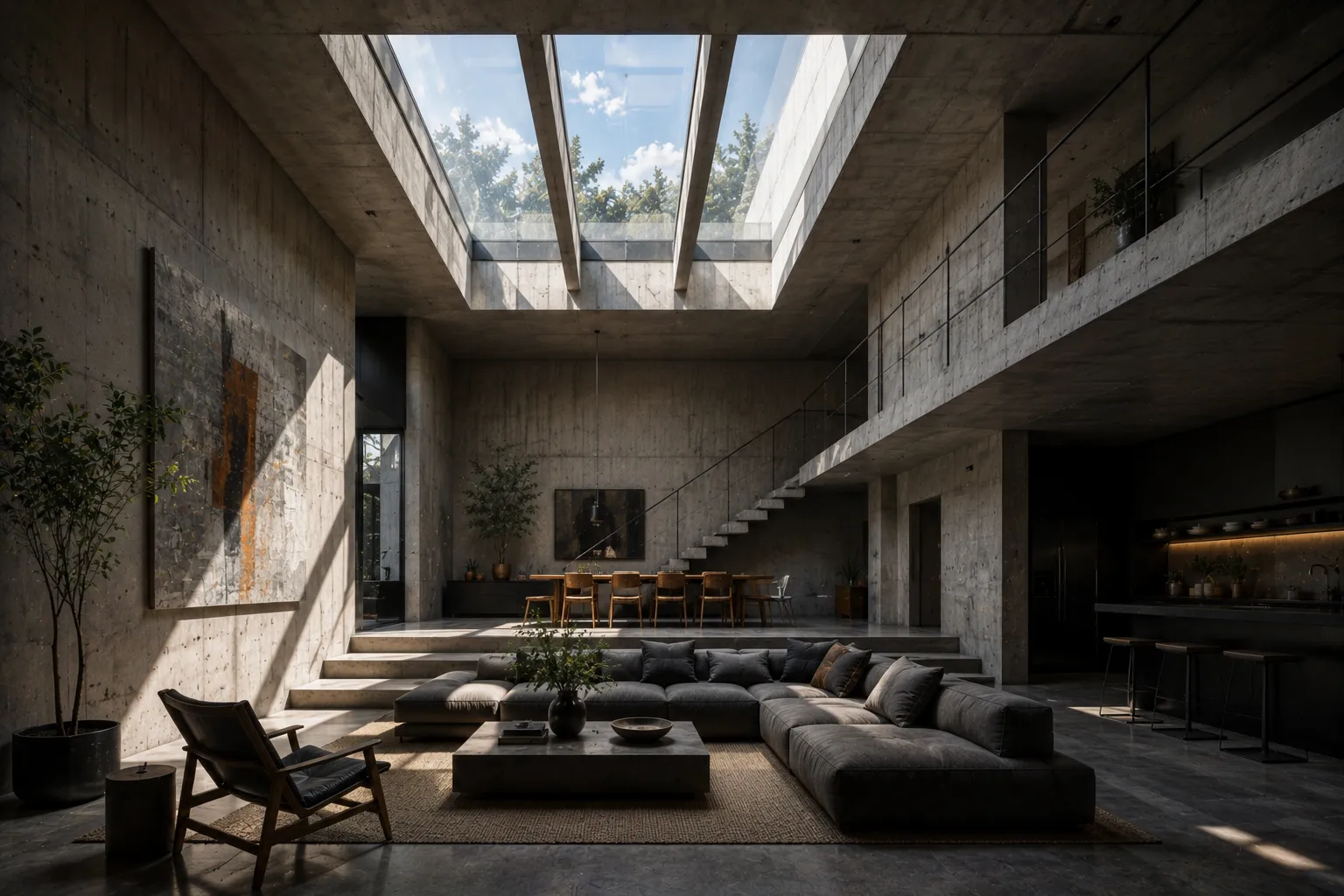
In brutalist interiors, daylight changes how concrete surfaces appear throughout the day. Shadows move across rough textures, making the scale of the space more visible. Skylights make heavy interiors feel more open and less enclosed. Even small openings above can improve the atmosphere and soften raw concrete surfaces.
Examples of Brutalism with Skylights
Some notable buildings demonstrate how brutalism harmonizes with natural light:
- König Galerie (former St. Agnes Church), Germany (Renovation Architect: Wolfgang Joop Scharn). Here, skylights bring daylight deep into the space, filling it with natural light and revealing the concrete structure of the former church. The result is a bright, open exhibition hall.
- Couvent Sainte-Marie de La Tourette, France (Architect: Le Corbusier). The monastery, with its famous “light cannons,” shows how top lighting can soften rigid forms. Natural light softens the raw concrete surfaces and makes the interior feel more balanced and comfortable.
These examples show how natural light can introduce greater visual dynamism to concrete spaces.
Technical Solutions for Skylights in Brutalist Interiors
There are different types of skylights that allow architects to work with space and light:
- Fixed skylights provide a constant flow of light. They are installed above stairs, corridors, and open areas where it is important to illuminate the space without ventilation.
- Operable skylights allow for ventilation, bringing fresh air into rooms. This is especially relevant for large rooms and atriums.
- Modular or integrated skylights create large light surfaces. Systems composed of multiple modules suit long spaces such as halls or studios.
- Skylight installation in Orange County considers climate, bright sun, and modern interior needs, providing comfortable lighting and optimal indoor temperature.
The contrast between the heavy mass of concrete and the airy light creates an architectural dialogue. Using Velux skylights makes brutalism modern and emotionally rich, transforming massive forms into interiors filled with light and air.