
Light Architecture in a Monochrome Interior
Monochrome interiors are built on a single primary tone and its midtones, without strong color accents. This approach creates a calm and visually consistent environment.
In such spaces, visual noise is reduced, allowing light and material textures to become more noticeable.
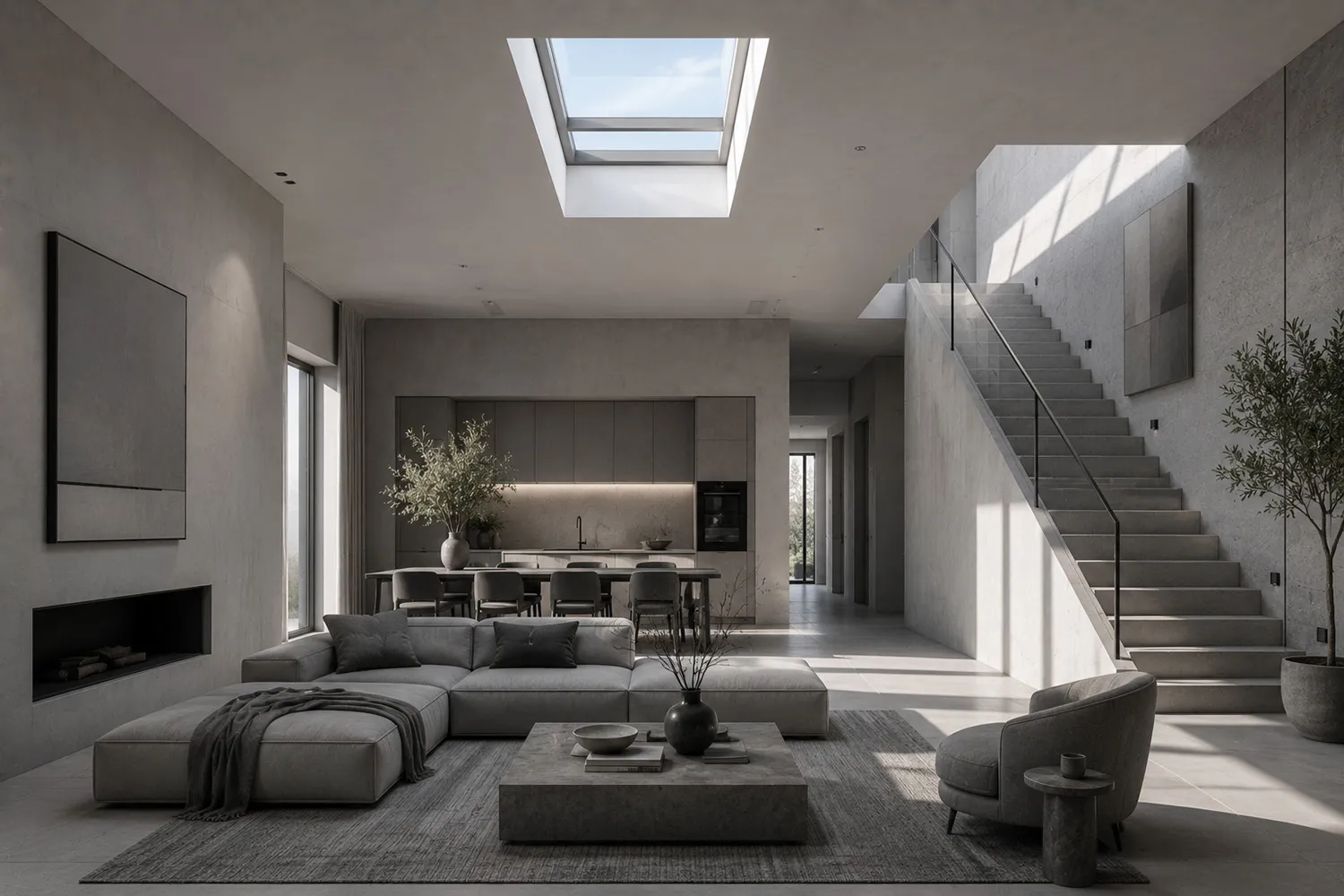
Gray Interior and the Role of Natural Light
Gray often becomes the foundation of monochrome interiors. It supports the space and does not draw attention to itself. In these interiors, it becomes especially noticeable how light works and how it shapes the perception of volume.
Here gray acts as a neutral light environment in which any change in lighting becomes architecturally significant.
Natural light reveals depth and volume within the space. It also appears differently throughout the day, changing how the interior is perceived. As a result, the space stops being a static composition and starts functioning as a system that depends on time and light.
Skylight as a Key Foundation of Space
Light from above behaves differently than traditional side lighting. It is not tied to a single plane and spreads across the space more evenly. Unlike façade light, Skylight creates a unified light field that connects all interior elements.
Throughout the day, light shifts across surfaces, creating varying levels of brightness and contrast. As daylight conditions change, the appearance of the interior changes as well. Shadows and gradual transitions enhance depth and make surfaces appear more three-dimensional.
Skylight here works as an architectural tool that defines how space behaves over time.
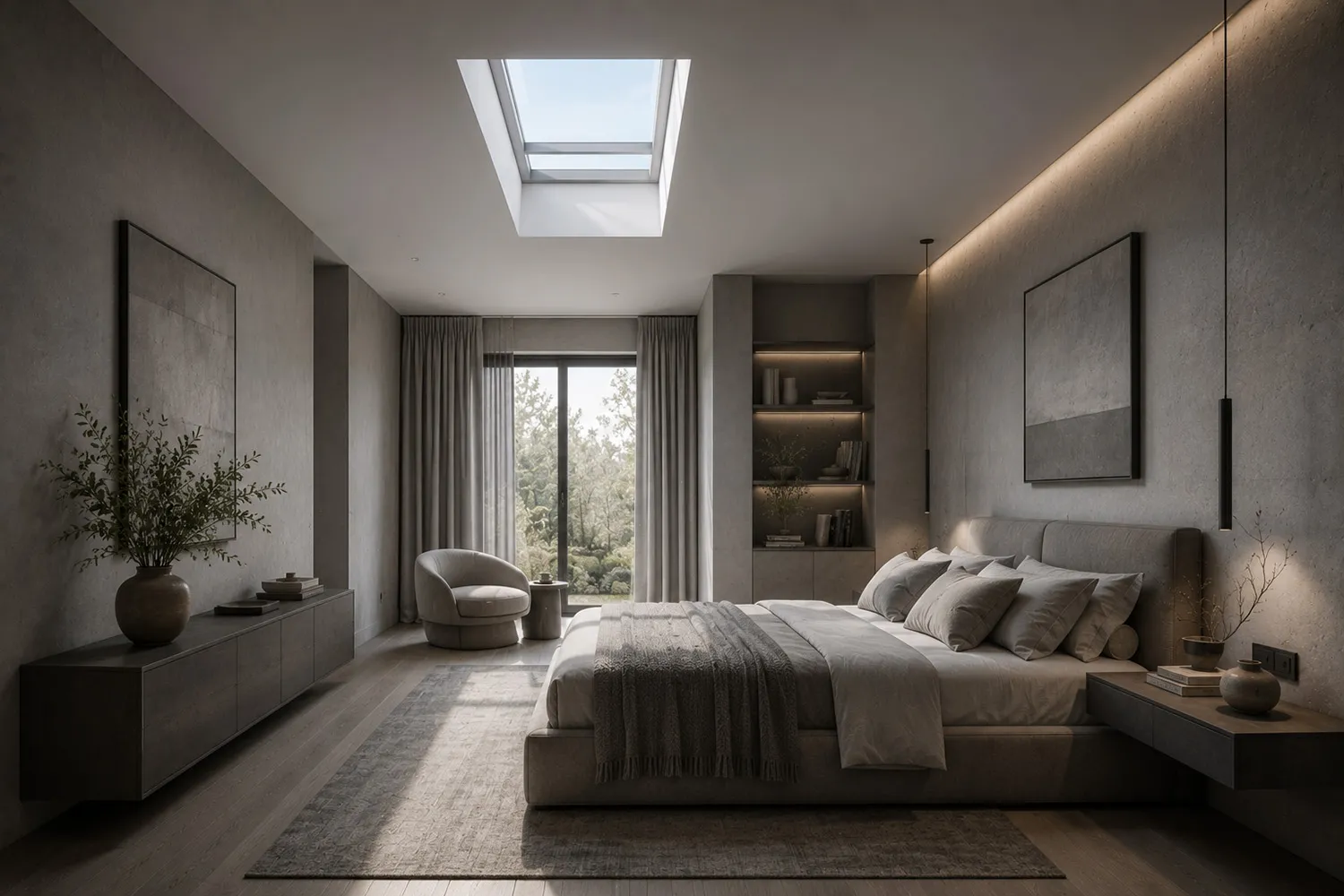
Materials as Conductors of Light
Gray surfaces preserve the natural properties of light and do not alter its perception.
On matte and slightly textured materials, lighting reads especially clearly. Light falls softly, without harsh reflections, creating smooth transitions between lighter and denser areas. As a result, the surface feels more dimensional.
In a gray interior, the character of the material becomes especially important. Plaster provides soft diffusion, concrete creates denser light patches, stone adds natural irregularity.
Even within a single color palette, light and texture create visual complexity.
Temporal Dynamics of Space
An interior with skylight changes throughout the day along with the movement of the sun.
Morning light is soft and diffused. It fills the space and smooths transitions.
By midday, the light becomes more directional, and architecture is read through shadows and contrast.
Toward evening, contrasts soften, shadows stretch, and the space takes on a deeper spatial expressiveness.
As a result, the same interior exists in multiple lighting states without changing its physical structure.
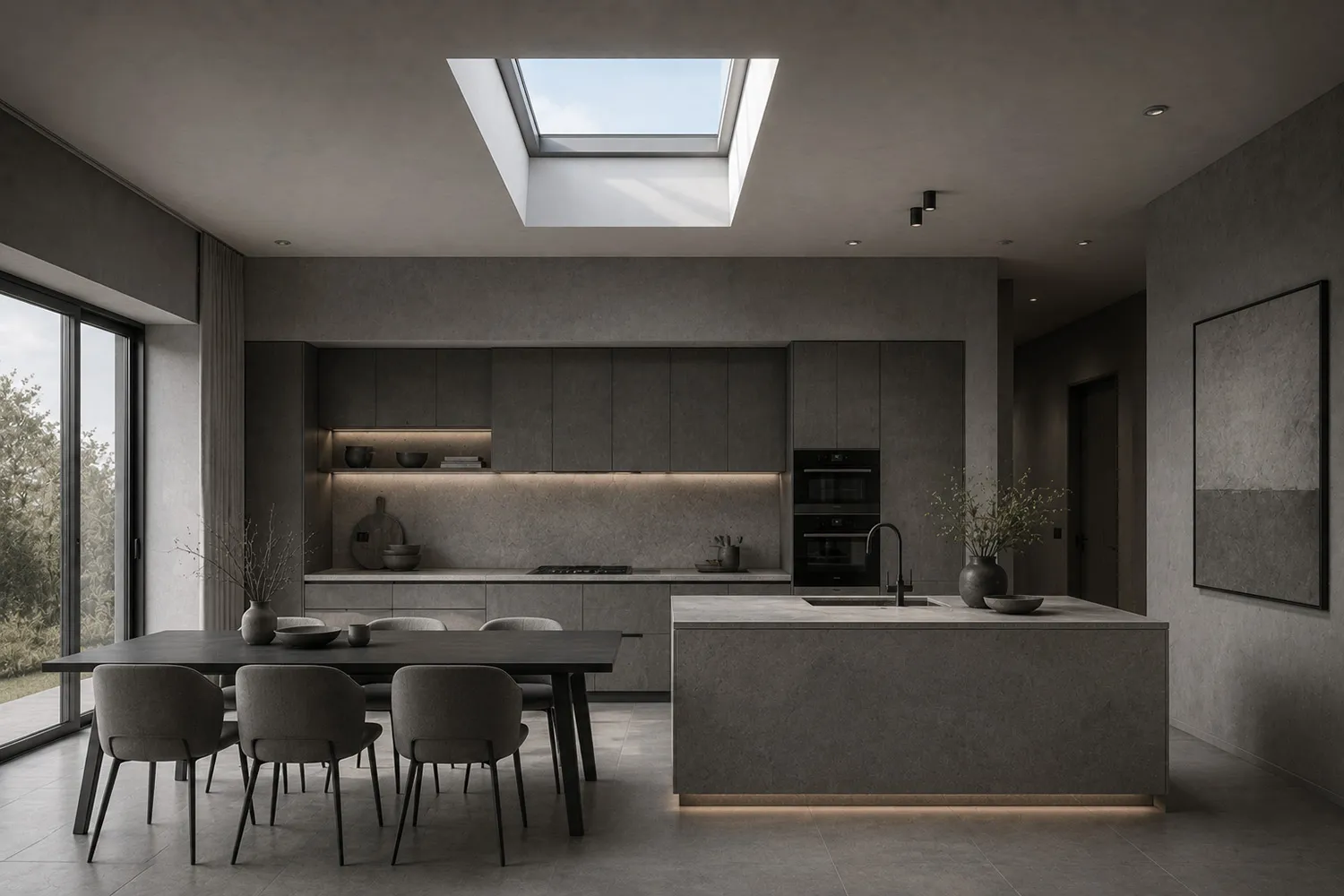
Where Skylight Becomes Architecturally Justified
Top light is often used where façade lighting is insufficient or unevenly distributed. In these cases, Skylight helps create a more balanced lighting environment.
In windowless central areas of the home, it provides natural light where traditional windows are not available.
Skylight is also used in stair spaces, in bathrooms, and in rooms with high ceilings, where it improves daylight levels and reduces the need for artificial lighting during the day.
In monochrome interiors, daylight becomes more noticeable because there are fewer colors competing with it. As light changes throughout the day, shadows and surface textures shift, and the space looks different without any physical changes to its structure.