
Natural Lighting: Features and Solutions
Natural lighting cannot be designed simply by increasing the amount of glazing. Daylight behaves much more dynamically within a space. It depends on the building’s orientation, the position and height of the windows, the depth of the rooms, surrounding buildings, and the materials it encounters along the way. Two homes with the same amount of glazing can receive very different amounts of daylight and distribute it differently throughout the interior.
In architecture, the term daylighting describes how these factors are considered and brought together. That is why natural lighting should be addressed as early as the design stage. Window placement, floor plan, ceiling height, openings, interior finishes, and shading elements all work together as one system.
What Is Daylighting and Why Should It Be Considered When Designing a Home?
Daylighting is a design approach that considers how natural light enters a home and how it is distributed throughout the interior. The amount of glazing alone does not determine how evenly daylight reaches different areas of a room. Consider a typical living room with a large window. On a sunny day, the area near the glass may be brightly illuminated, but daylight levels generally decrease farther into the room. In a deep floor plan, the far end may remain relatively dark despite the large window.
That is why the entire path of light is considered during the design process. It is affected by the height of the window head, its position on the wall, and the size of the room, the presence of partitions, and the direction from which sunlight enters.
In addition, the amount of natural light in a room changes throughout the day and over the course of the year.
What Affects Natural Light in Homes
The orientation of a home directly affects the quality of its natural lighting. In Southern California, south-facing spaces receive abundant daylight throughout the year and work well for rooms that benefit from a consistent level of illumination. At the same time, large south-facing windows are best paired with exterior shading to help control heat gain during the warmer months.
East-facing windows provide bright morning light, which is generally easier to manage. West-facing windows require more attention because, in the afternoon, the low sun enters rooms at a sharp angle, increases glare, and can significantly raise indoor temperatures. For this reason, awnings, vertical shading elements, and appropriate glazing are particularly useful for west-facing windows.
North-facing spaces generally receive more diffuse daylight and less direct sunlight. This orientation works well for rooms that benefit from relatively stable illumination without excessive solar heat gain.
Window size also matters, but area alone does not tell the whole story. The height and position of an opening can significantly affect the result. A tall window can bring daylight deeper into a room than a wide window of the same area positioned lower on the wall.
Room depth determines how far daylight can penetrate from exterior windows. Illumination generally decreases with distance from the glazing. In a compact bedroom, one large opening may provide enough daylight, while in a long living room, the far end may remain in shadow.
The amount of daylight is also affected by what is outside the window. A tall neighboring building, trees, an overhang, or dense development can significantly reduce the amount of natural light that reaches the interior.
How Architecture Helps Make the Most of Daylight
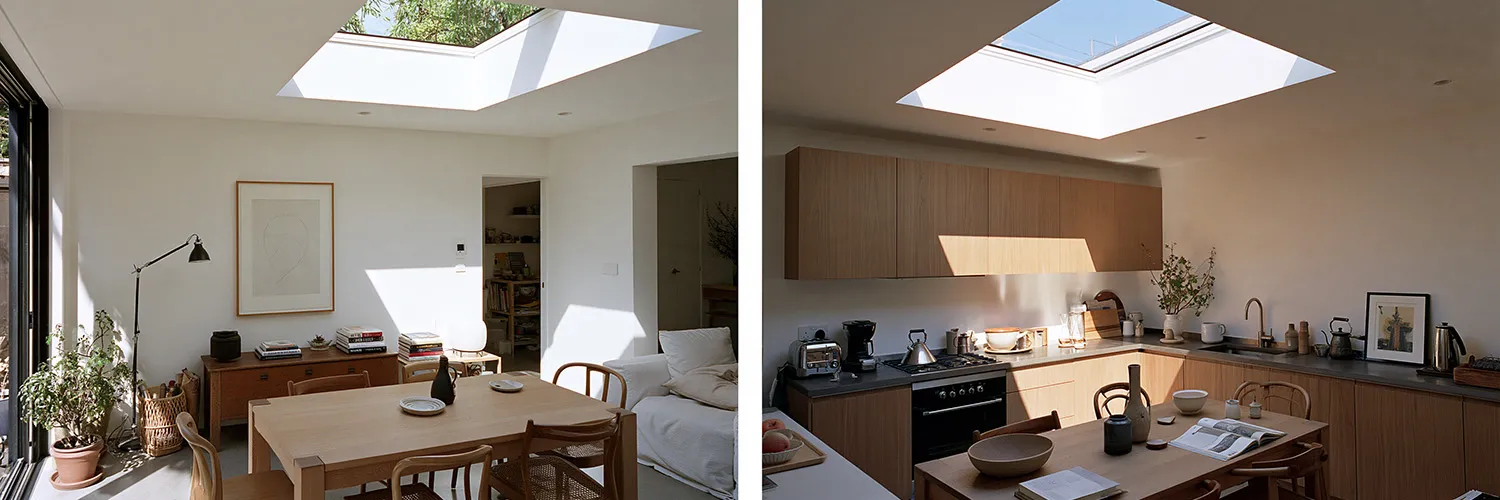
There are several daylighting techniques that help direct and distribute natural light throughout a home. The most obvious approach is to position windows thoughtfully. Overhead openings can bring daylight into a space through skylights. This solution is particularly useful in areas where it is difficult to install a conventional window, such as the center of a home or a space beneath a flat roof.
Sometimes, simply changing the placement of openings can make a difference. Several windows distributed across different walls can provide more even illumination than one very large window on a single facade.
In homes with more complex layouts, glass partitions, transom windows above doors, and open passages can also allow daylight to move from one room to another.
How Interior Design Affects Natural Light
Once daylight enters a room, it begins interacting with the surfaces around it.
A light-colored matte wall reflects a significant amount of incoming light and helps distribute it throughout the space. A dark surface absorbs more light. Glossy finishes reflect light more directly and can create harsh glare.
For example, a room with the same window can feel completely different with white walls, dark wood, or rich matte colors.
A light-colored ceiling reflects daylight back into the room and can help improve illumination farther from the windows. Light-colored flooring can also contribute to reflected daylight, particularly near window openings.
Furniture also affects how light moves through a space. A tall cabinet next to a window creates a localized shadow and can block a significant portion of the incoming light. Lower furniture leaves more open space for daylight to spread.
How to Avoid Problems with Natural Lighting
Excessive daylight can cause glare, particularly when direct sunlight or strong reflections enter a person’s field of vision. This can make it difficult to work at a desk or use a computer screen, even in an otherwise well-lit room.
Another concern is overheating. Large areas of glazing on the sunny side of a home can significantly increase indoor temperatures during the summer. In this situation, exterior shading, appropriate glazing, and thoughtful window orientation are all important.
Sharp contrast can also be a problem. If the area near a window is very bright while the far end of the room is almost dark, the eyes have to constantly adjust to different levels of illumination.
The choice of daylighting solutions for homes depends on the cause of the problem. In some cases, exterior blinds or overhangs can help, while in others, the solution may involve changing the position of a window, using solar-control glazing, incorporating light-diffusing materials, or adjusting the floor plan.
A home should be evaluated based on how the space changes as natural light moves through it during the day. The quality of daylighting is best understood through this changing relationship between light and space.