
Skylights in Coastal California Interiors
Skylights can change how daylight enters a room and falls across its surfaces. Light from above reveals the texture of wood and stone. The appearance of these materials changes throughout the day as the sun moves.
In coastal California interiors, skylights offer another way to connect indoor spaces with the outdoors. Homes along the coast often feature open layouts and large windows overlooking the surrounding landscape. The position and dimensions of a skylight affect how daylight reaches different parts of the room. The choice depends on the interior layout and where additional light is needed.
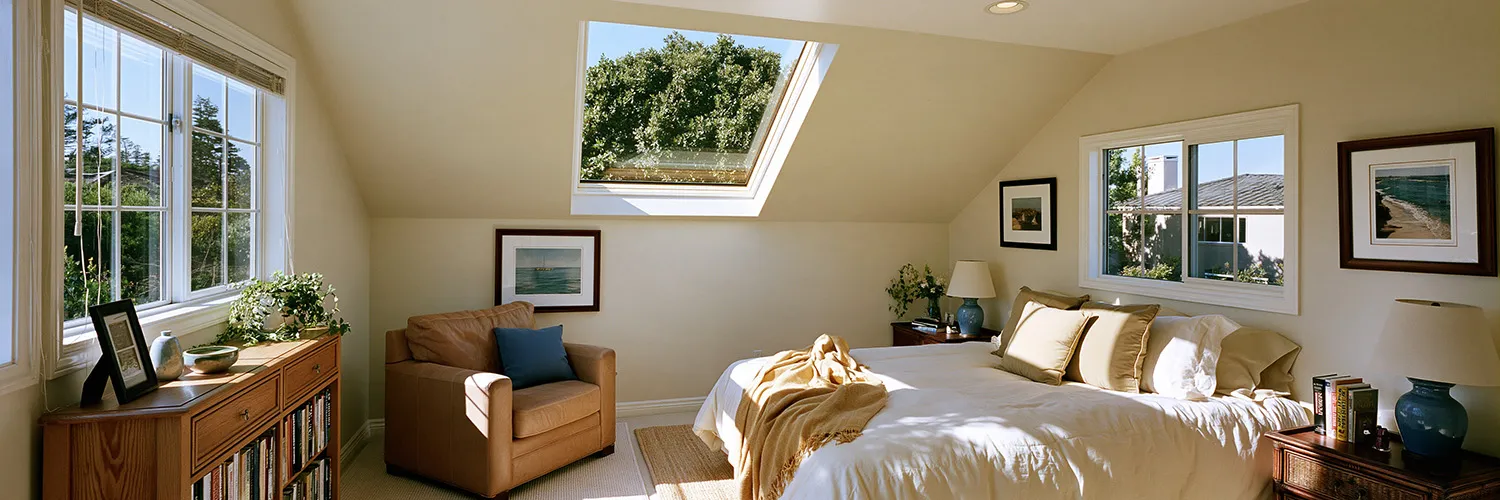
A Skylight Should Work with the Interior
It is easy to get carried away with scale when adding a skylight to a roof. It may seem logical that if you want enough light, you need to make the skylight larger. But the amount of light does not always determine whether the solution works well.
Imagine a small kitchen with wood cabinetry, a stone countertop, and a carefully proportioned island. A huge rectangle in the ceiling can draw too much attention to itself and disrupt the calm composition. A smaller skylight positioned directly above the island can create a more interesting effect. The eye gets a vertical focal point, while the light highlights the central element of the kitchen.
The position of the skylight determines which surfaces receive direct sunlight and how the kitchen is illuminated throughout the day. The grain of wood and the surface texture of stone become more pronounced under directional daylight.
In another project, a long, narrow skylight may be the right solution. It can visually elongate the room and create a line of light along the ceiling. This approach is especially effective in long hallways, kitchens, and spaces with elongated geometry.
There is also a third option: several small windows instead of one large one. Several smaller skylights can distribute daylight across different parts of the room. Depending on their orientation, patches of direct sunlight may move across the walls and floor throughout the day.
The dimensions of a skylight should therefore respond to the proportions of the room and the arrangement of the interior beneath it.
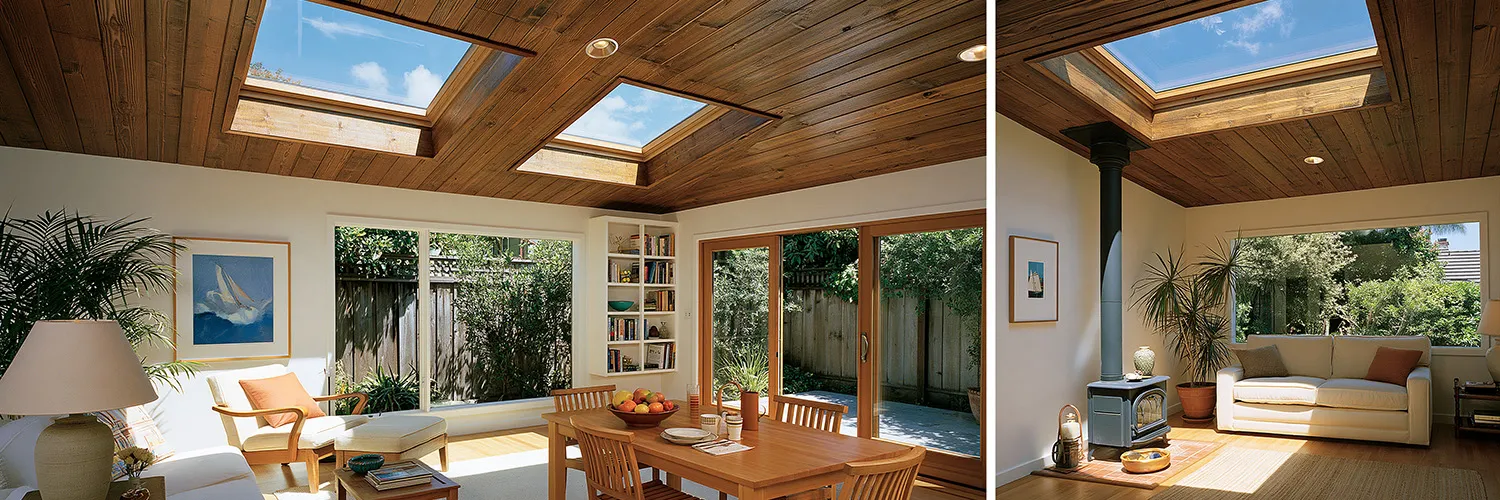
Where to Direct the Light
When designing skylights in coastal homes, one of the most useful questions is very simple: what exactly do I want to illuminate?
Light from above is especially expressive where there is something for it to emphasize. A stone countertop, wood paneling, textured plaster, a shower area with natural stone, a dining table, or a large plant.
In coastal California interiors, the changing position of the sun affects how natural materials are perceived indoors. A skylight can direct attention to individual surfaces and reveal details that might otherwise go unnoticed.
Imagine a living room with a limestone wall. Under ordinary, even lighting, its uneven surface may look fairly restrained. But light coming from above creates soft shadows and emphasizes the relief. As the sun moves, the pattern on the wall changes.
The same thing happens with wood. The same oak can look completely different in the morning and toward evening: the tone changes, as do the depth of the texture and the contrast between lighter and darker areas.
That is why skylights in coastal homes can be viewed as a form of natural accent lighting.
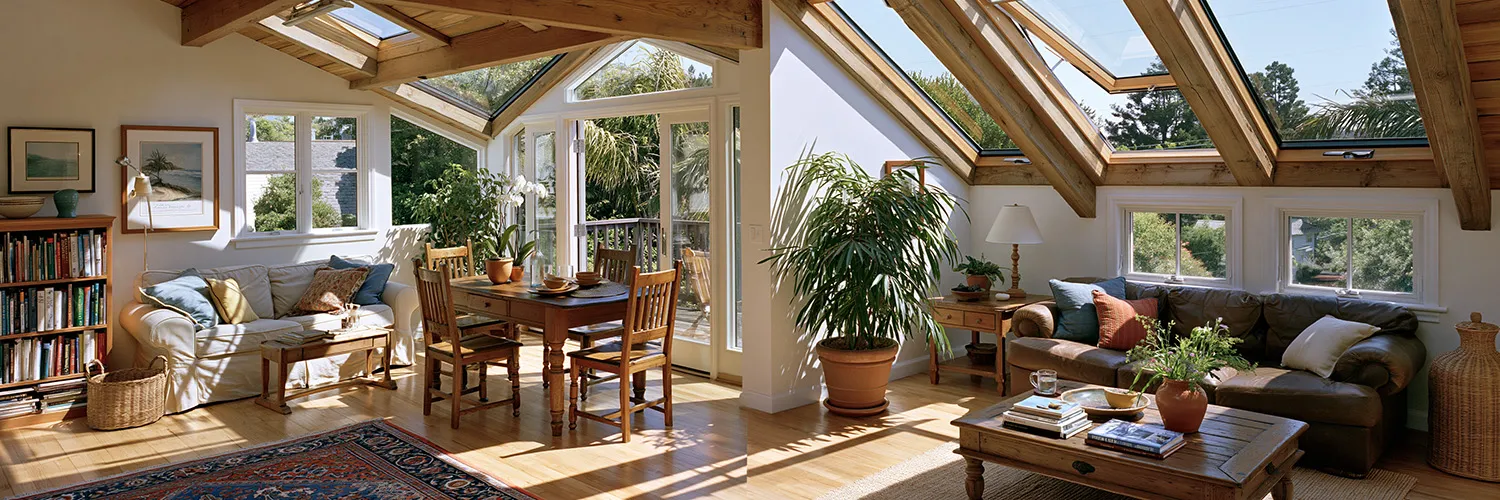
A Skylight Changes the Way the Ceiling Is Perceived
We are used to thinking of walls as compositional surfaces. As a result, we choose their color, finishes, artwork, and light fixtures. The ceiling, meanwhile, often remains a background element.
Once a skylight is introduced, geometry appears on the ceiling: a frame, a reveal, a shadow, and depth. All of this is visible from anywhere in the room. That is why a skylight should be designed together with the ceiling.
If the interior is minimalist, a clean rectangular opening can look almost graphic. In a more architectural space, it can make sense to emphasize the depth of the reveal. Sometimes the frame is deliberately made as unobtrusive as possible so that the boundary between the ceiling and the sky almost disappears.
At the same time, it is not only the opening itself that matters, but also the quality of the light inside it. The depth of the reveal, its proportions, and its orientation can make the light softer or, conversely, emphasize contrast and shadows. That is why even a very simple skylight requires the same attention to detail as a wall, window, or built-in furniture.